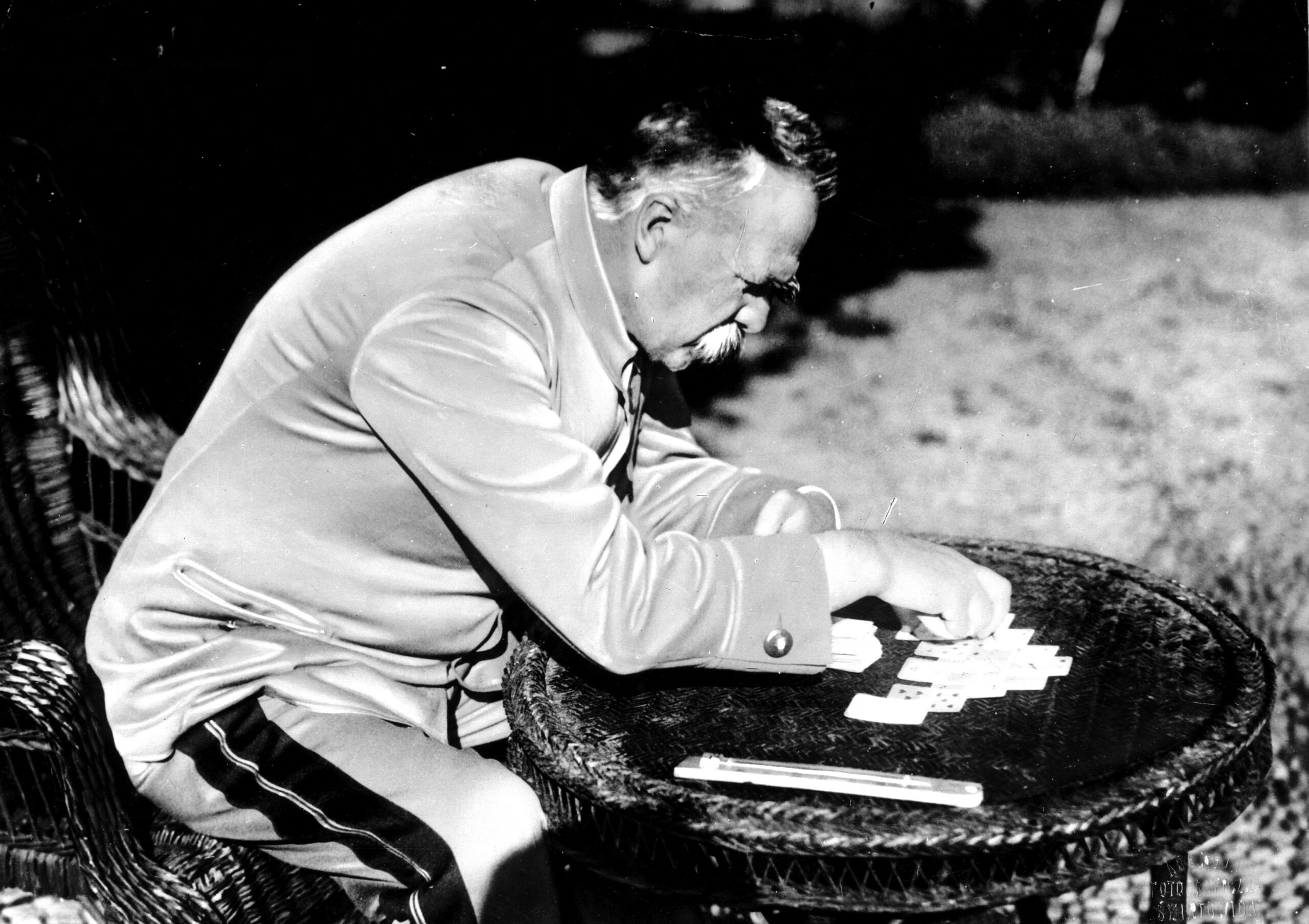
A soldier, strategist, and statesman, he enjoyed immense authority among his compatriots. As Marshal of Poland, he became a symbol of the fight for freedom. Józef Piłsudski is still considered a national hero, and his influence extended far beyond the country’s borders, influencing the fate of Europe as well.
by Grzegorz Barański
The road to independence
Piłsudski was born on 5 December 1867 in Zułowo, in the Vilnius region, into a family with patriotic traditions. He grew up at a time when Poland did not exist on the map, divided among the occupying powers (Russia, Prussia, and Austria). Raised in the spirit of love for his homeland, he became involved in independence activities from a young age. In 1887, as a student, he was arrested by the Russian authorities for participating in a conspiracy against the Tsar, and exiled to Siberia. These experiences only strengthened his determination to restore Poland’s freedom.
After returning from exile, Piłsudski co-founded the Polish Socialist Party, seeing the socialist movement as an opportunity to fight the tsarist regime. He quickly became one of the leaders and organisers of actions against the occupying power. In 1908, he gained fame for his daring campaign near Bezdonys – an attack on a Russian mail train with the purpose of raising funds for his underground activities. Piłsudski, however, treated socialist ideology primarily as a tool for achieving his overarching goal – an independent Poland. Years later, he himself would admit: ‘I rode the red tram of socialism all the way to the Independence stop, and that’s where I got off’. In this way, he implied that once the goal of a free homeland had been achieved, he set aside old political divisions.
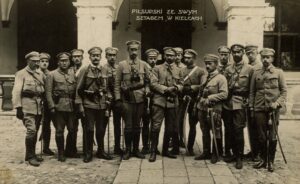
World War I provided the long-awaited opportunity to carry out aspirations for independence. Already in 1914 Piłsudski formed the Polish Legions – volunteer military units that joined Austria-Hungary to fight against Russia. Piłsudski became commander of the 1st Brigade of the Polish Legions and gained fame as a courageous, charismatic soldier. The Legions became the nucleus of the future Polish army. However, when the Central Powers refused to guarantee Poland’s freedom in any real way, Piłsudski turned down further cooperation. In 1917, during the so-called Oath crisis, he refused to swear allegiance to the German emperor, for which he was imprisoned in the Magdeburg fortress. His unwavering stance only strengthened his renown among Poles.
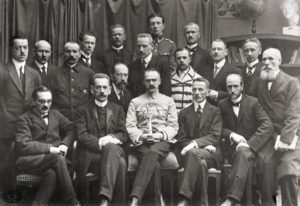
On 11 November 1918, the Germans, losing the war, released Piłsudski and handed him military command of Warsaw. On that day, the dream of several generations of Poles came true – Poland declared independence. Józef Piłsudski assumed the position of provisional chief of state, becoming the de facto leader of the reborn Polish Republic. He and his government faced the enormous challenge of rebuilding the country after years of bondage. Poland returned to the map as a country severely devastated, administratively and economically divided by its former partitioners, with differing legal systems and currencies in each region. Furthermore, the country’s new borders had not yet been established – they still needed to be defended and shaped.
The Bolshevik war
The greatest threat to the newly reborn Poland proved to be Bolshevik Russia. In 1919, the Polish–Soviet war broke out, deciding the fate not only of Poland but also all of Central Europe. Piłsudski understood that the Bolsheviks sought to bring the communist revolution to the West. Their leaders openly spoke of marching over the ‘corpse of Poland’, and on to Germany and France. Piłsudski, acting as commander-in-chief, led the Polish armed forces to repel this onslaught.
At the same time, he had a political vision for the region. It envisioned the creation of a bloc of independent states between the Baltic and Black Seas (including Poland, Lithuania, and Ukraine), which would jointly constitute a barrier against Russian imperialism and German pressure. In keeping with this idea, Piłsudski allied himself with Ukrainian ataman Symon Petliura. In April 1920, the Polish army, with the participation of Ukrainian units, launched the Kiev offensive – an attempt to create an independent Ukraine free from the Bolsheviks. After initial losses, the Bolsheviks quickly launched a counterattack. By the summer of 1920, the situation had become critical – the Bolshevik offensive had reached as far as Warsaw. Had Poland fallen, the revolutionary army could have continued westward.
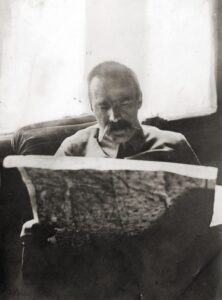
In August 1920, Piłsudski personally devised a bold plan to defend the capital and launch a simultaneous counteroffensive. The decisive battle of Warsaw (12–25 August 1920) ensued: Piłsudski secretly regrouped his forces and, on 16 August, led an attack on the rear of the surprised Bolsheviks from the Wieprz River, while the Polish army defended the foreland of Warsaw. The manoeuvre proved masterful. Poland preserved its independence, achieving one of the most glorious victories in its history.
The significance of Piłsudski’s triumph in 1920 extended beyond the region. Poland not only defended its sovereignty but also prevented the spread of the Bolshevik revolution into Europe. British diplomat Lord Edgar D’Abernon called the battle of Warsaw ‘the eighteenth decisive battle in world history’, pointing out that the outcome of the clash had tipped the scales of history. Piłsudski’s victory ensured peace in this part of the continent for nearly two decades – the new states of the region (such as Finland, Estonia, Latvia, and Lithuania) remained independent.
The Polish–Soviet war ended with the Treaty of Riga in 1921, which established the eastern border of the Second Polish Republic on terms favourable to Poland. Although Piłsudski achieved a military victory, he failed to create an independent Ukraine or a federation with Lithuania. Nevertheless, the very existence of a strong, free Poland changed the balance of power in Central and Eastern Europe.
Leader of the reborn state
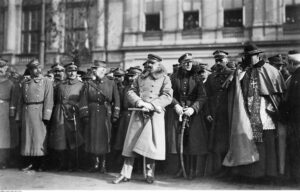
After securing the state’s existence on the battlefields, Piłsudski faced another challenge: building stable internal foundations for the Second Polish Republic. From 1918 to 1922, he held supreme civil and military authority in Poland. During that period, Poland held elections to the Legislative Sejm and adopted the first modern constitution (March 1921), which introduced a system of parliamentary democracy. Although Piłsudski initially held near-dictatorial powers due to his wartime achievements, he voluntarily resigned as head of state in 1922, handing over power to a president elected by parliament.
Unfortunately, the young Polish state quickly descended into internal political conflicts. Government crises multiplied, and the situation was further destabilised by the assassination of the first president, Gabriel Narutowicz, in 1922. The years 1922–26 were a time of weak, shifting governments and growing chaos.
In May 1926, Piłsudski took a drastic step: he launched a coup d’état, known as the ‘May coup’. Within three days (12–15 May 1926), his forces seized control of Warsaw. Several hundred people died in clashes with government-aligned forces. At the same time, however, a wider-spread civil war was averted. After the coup, Piłsudski once again became head of state, although he did not formally assume the office of president. He remained in the shadows, as minister of military affairs and inspector general of the armed forces; but he was actually the one pulling the strings of power.
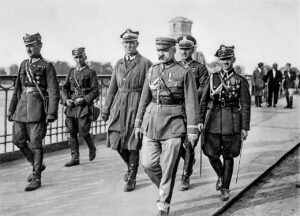
Piłsudski ruled with an iron fist, convinced that only a strong executive power could ensure order and security in Poland. Parliament’s powers were gradually curtailed, the press was censored, and the political opposition repressed. Democracy was dealt a severe blow. These authoritarian measures sparked controversy both at home and abroad, with Piłsudski accused of dictatorial tendencies. He himself claimed to be acting in the nation’s interest, in order to prevent a greater evil. The Sanation government brought political stability and a relative degree of order after the turbulent preceding years. The state began investing in infrastructure and armaments, preparing for impending challenges. Many historians emphasise that, thanks to Piłsudski’s rule, Poland avoided economic and social chaos.
Foreign policy
From the outset, Marshal Piłsudski understood that Poland’s survival would be determined by its international standing and relations with powerful neighbours. His primary foreign policy objective was to ensure the country’s security in a turbulent Europe. In the 1920s and 1930s, he sought to maintain an equal distance from Russia (the USSR) and Germany, aware that both powers could threaten Polish independence. On his initiative, Poland concluded non-aggression pacts – first with the USSR (1932), and later with Nazi Germany (1934). Piłsudski viewed these agreements as a way to buy time and postpone a potential conflict. He harboured no illusions about the intentions of his great neighbours. He still saw in Russia a perennial desire for expansion, and viewed Germany with deep distrust.
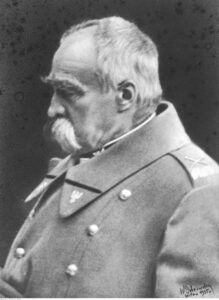
Józef Piłsudski influenced the fate of all of Central and Eastern Europe through his vision of regional cooperation. He supported the independence movements of many nations previously subjugated by the Russian Empire – a policy known as Prometheism. He believed that a free Poland should help other nations achieve independence, creating a system of mutually supportive states from the Baltic to the Black Sea. In a sense, post-war movements for integration and cooperation in our part of Europe (such as the Visegrad Group or the Three Seas Initiative) can be considered a distant echo of his ideas about solidarity among the countries of the region.
Piłsudski also sought to strengthen Poland’s international position through active diplomacy. He was committed to preserving the post-World War I order in Central Europe. When Adolf Hitler came to power in Germany in the 1930s, Piłsudski even considered the possibility of a pre-emptive strike against Germany before it became too big a threat, but this idea was never put into action. During his lifetime, Poland managed to maintain its independence in unfavourable circumstances. Piłsudski’s authority undoubtedly played a role in this – both in the country, where his foreign policy was supported, and abroad, where his opinion was taken into account.

Heritage and memory
Józef Piłsudski died on 12 May 1935 in Warsaw. His funeral turned into a massive demonstration of national unity. The coffin containing the Marshal’s body was transported by train to Krakow and laid to rest in the Wawel Cathedral, alongside the tombs of Polish kings – symbolically confirming the importance of his achievements. An estimated 250,000 people from Poland and delegations from more than a dozen countries attended the funeral. Mourning spread throughout the country for the man who had become a living legend.
Józef Piłsudski’s legacy continues to generate considerable interest and debate among historians, but one thing remains indisputable: he played a key role in Poland regaining and maintaining its independence in the first half of the 20th century. His name is often mentioned alongside national heroes such as Tadeusz Kościuszko and Józef Poniatowski. For many Poles, Piłsudski embodies patriotism and indomitability – a man of action who devoted his entire life to serving his country. He was able to unite people of widely differing views around the idea of independence, and rise to the occasion at pivotal moments in history. His charisma, courage, and vision earned him a lasting place in national memory. To this day, dozens of his monuments stand in Polish cities, and streets and squares bear his name. Many of Piłsudski’s quotes have become common parlance, a reminder of his sense of humour and wisdom.
Author: Grzegorz Barański
Translation: Katarzyna Jopek