
Major international classical music competitions evoke strong emotions in both participants and observers. They offer winners cash prizes, concert commissions, and recording contracts; provide commentators ample material for reflection and discussion; and deliver unforgettable aesthetic experiences to audiences. One of the oldest public events of this kind is the International Fryderyk Chopin Piano Competition, which was first held in Warsaw in 1927 thanks to the initiative and determination of Professor Jerzy Żurawlew (1886–1980).
by Iwona Lindstedt
Professor Żurawlew was an outstanding teacher and pianist, a student of Aleksander Michałowski, who in his youth had studied with Chopin’s student Karl Mikuli. He was concerned about halting the decline in the performances of Chopin that had followed World War I. As Jerzy Waldorff noted, at the time “young pianists had largely turned away from Fryderyk Chopin, associating him with a ‘sentimentalism reeking of staleness,’ and his work was being dismissed as the product of a hot-house sensibility, which made it seem overly refined and morbid,” which negatively impacted pianistic interpretations (Wielka gra. Rzecz o Konkursach Chopinowskich, Warsaw 1985, p. 60). To rekindle interest in Chopin, Żurawlew decided to introduce a competitive element to music, akin to sports competitions, but not between individual “players,” but rather between multi-person teams representing many countries.

The task he set for himself was very difficult and multifaceted. It was not enough to justify the idea of artistic competition with tangible benefits for young performers; organizing such an event required an immense effort. Although the idea was conceived as early as 1925, it took an additional two years before approval was granted by the authorities and the public, along with the necessary financial backing.
Initially, the musical community and state authorities were reluctant to support the idea. As Żurawlew recalled in 1955, “The consensus among musicians was that Chopin was so great that he would defend himself. The Ministry of Religious Denominations and Public Enlightenment announced that there were no funds, […] and in general the idea was unrealistic to carry out.” President Stanisław Wojciechowski also declined their request for patronage, which was crucial for providing the competition with the necessary publicity and prestige abroad. The situation seemed hopeless, even though the director of the Polish Match Monopoly, Henryk Rewkiewicz, had offered the considerable sum of 15,000 złoty for the competition. A music lover, social activist, and board member of the Warsaw Music Society, Rewkiewicz was also a friend of Żurawlew. The sum came from his private assets.
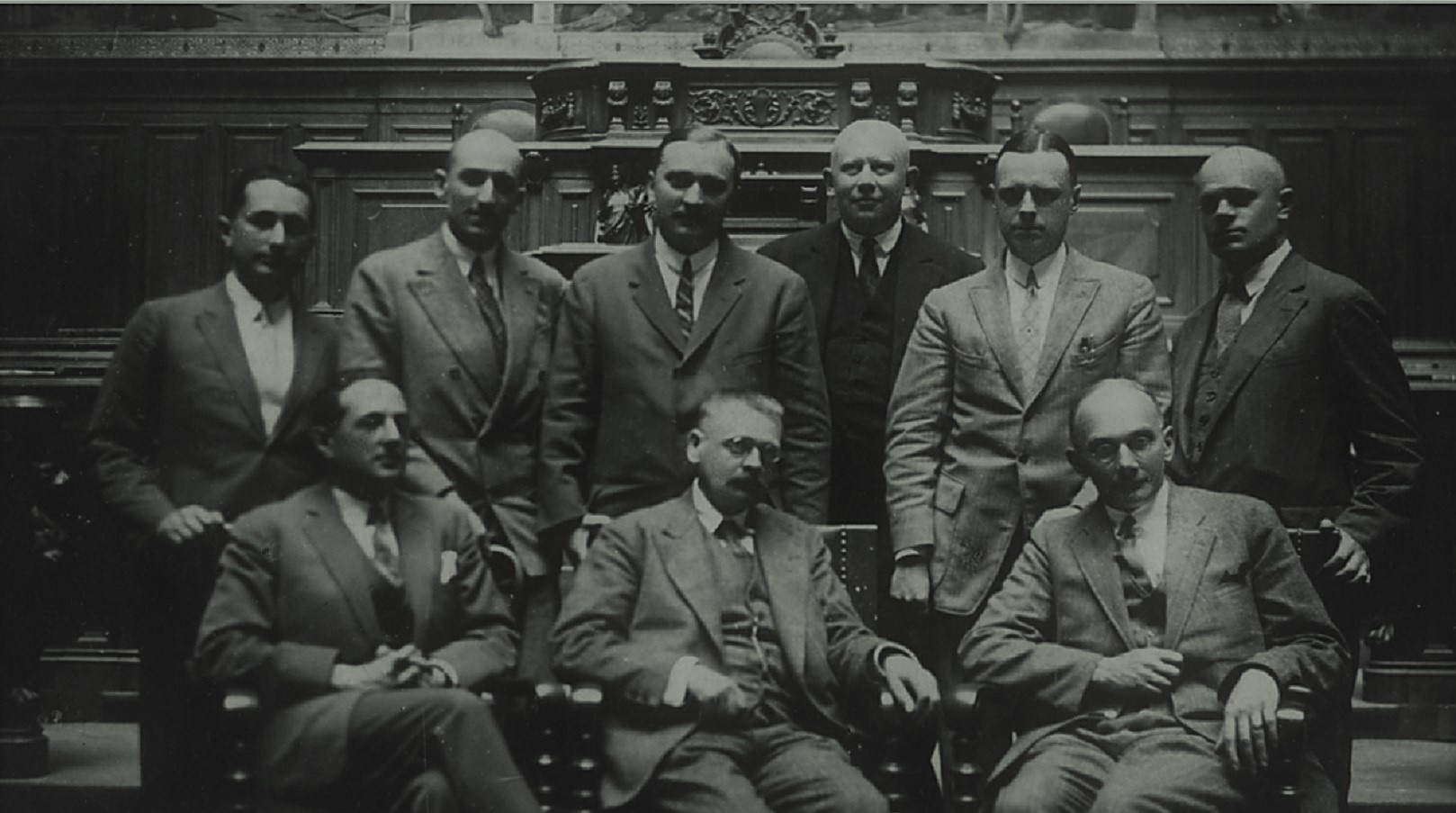
However, after the events of May 1926, when Marshal Józef Piłsudski assumed power in the Second Polish Republic, the situation changed dramatically. The new president, Ignacy Mościcki, agreed to Żurawlew’s request and took the competition under his patronage. The Warsaw Music Society and the Chopin Higher School of Music, which provided substantial support, took on the organizational responsibilities for the event. Financial backing was provided by the Ministry of Religious Denominations and Public Enlightenment. The organizing committee was composed of some of the most outstanding representatives of the musical world of the time. This included Aleksander Michałowski, Felicjan Szopski (composer and music critic), Tadeusz Czerniawski (composer), Witold Maliszewski (composer), Leopold Binental (violinist and expert on Chopin’s work), Mateusz Gliński (conductor and music critic), as well as the writer and publicist Juliusz Kaden-Bandrowski and Włodzimierz Czetwertyński, the president of the Warsaw Music Society.

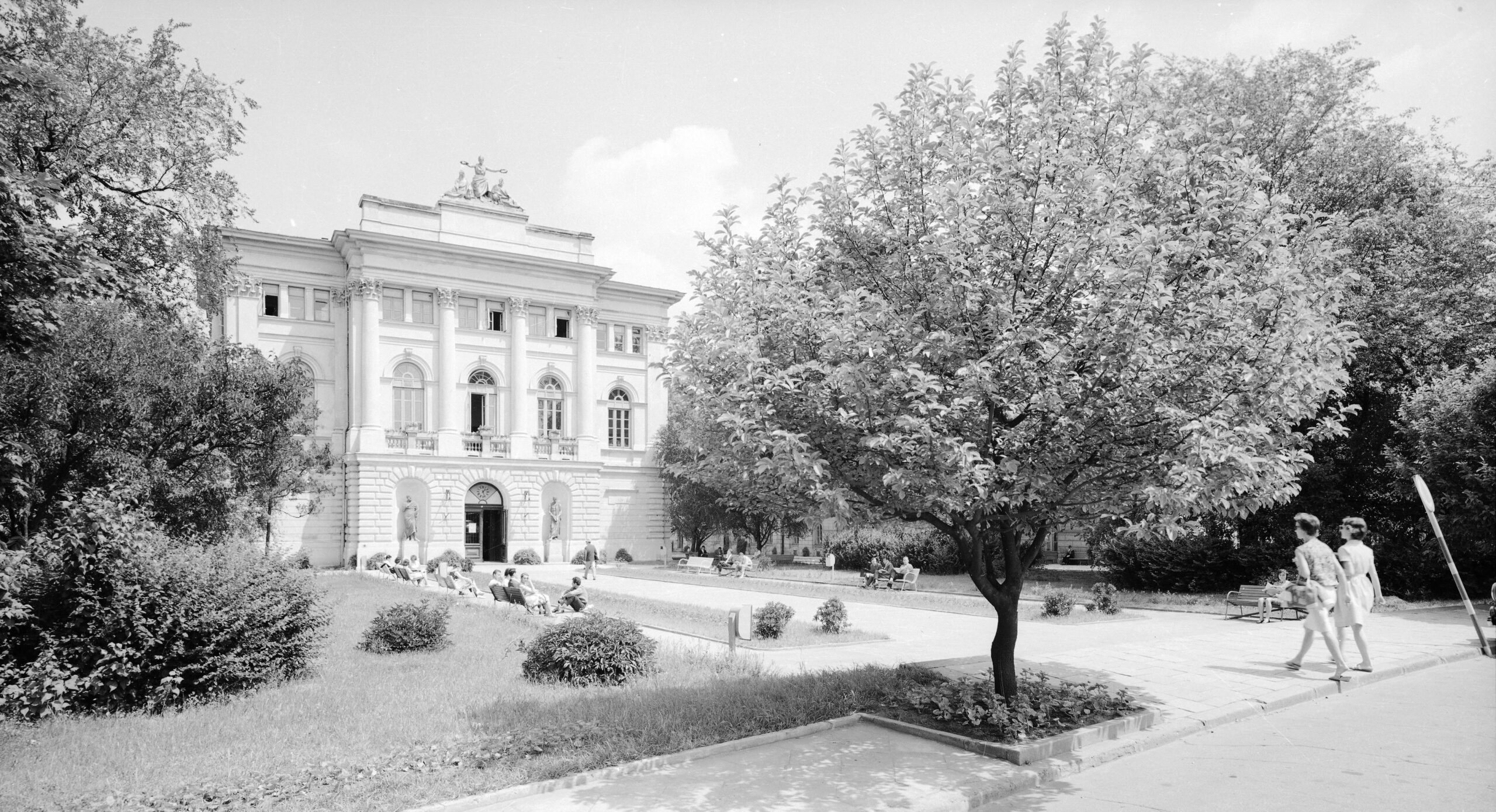
The competition was initially scheduled for October 15, 1926, coinciding with the unveiling of the Chopin monument by Wacław Szymanowski in the Royal Łazienki Park. Unfortunately, due to technical problems, the unveiling was postponed until November 14, and the start of the competition was subsequently postponed until January of the following year. The event eventually took place on Sunday, January 23, in the Warsaw Philharmonic Hall.
Prior to the competition, the rules and various issues faced by the organizers were discussed in the press. Among them was the challenge of [selecting] the right instrument. The Parisian company Pleyer had sent a chamber piano to Warsaw for the competition, but its sound was deemed inadequate for the large philharmonic hall. Ultimately, the participants used a Bechstein piano instead. Another controversial issue was the decision to have a jury that consisted exclusively of Poles. The assumption was that Polish pianists would win, and that foreigners would, at best, learn from the source. Thus the Polish jurors seemed to be the proper authorities to define and mark out the essential tradition of Chopin performances for the future. “The most important thing for me was that Chopin is closest to Poles, so Poles have to be the judges,” Żurawlew said in a radio broadcast.
According to the competition rules, candidates from all countries who were up to 27 years of age and had completed piano studies were eligible to participate. A total of 32 candidates applied, including 14 foreigners. Notably, there were no participants from France, Germany, or England, while Soviet Russia was represented by as many as six pianists. Initially, the plan was to group participants by nationality, and allow the winners of the first prizes from each group to advance to the final. However, due to the low number of international contestants, all foreign and Polish performers were scheduled to compete in a single round based on a random draw.. The jury evaluated these performances on a scale from 1 to 12 and selected for the second stage only those candidates who scored the highest. And it could not be two-thirds of the maximum number. In this way, eight of the most outstanding Chopin performers were selected by the competition jury based on their interpretations of nocturnes, mazurkas, preludes, ballades, etudes, and the Polonaise in F sharp minor. In the next stage, these finalists performed one of Chopin’s concertos with an orchestra conducted by Emil Młynarski. The competition lasted a full week, until Saturday, January 29. The auditions began at 12:00 in the Philharmonic Hall, which was packed with listeners, including many who were not regular concertgoers. The first competition was broadcast live on the radio, although, as Jerzy Waldorff, who listened from his family estate outside Warsaw, noted, the broadcast quality was rather poor.

The press response was energetic, although the Organizing Committee’s relationship with critics and reviewers was put to a severe test. At the chairman’s request, journalists were instructed to refrain from evaluating the competition performances, and to report on the performances only in a chronological manner, so as not to exert any influence on the jury members. This directive sparked considerable outrage. However, some very suggestive reports were printed, which – like the one quoted below by Stanisław Niewiadomski from the magazine Warszawianka – captured the competitive spirit and emotional intensity of the event, almost resembling the coverage of a sporting competition:
“Yesterday, Mr. Jakub Gimpel (Polish group) and Mr. Grzegorz [Grigory] Ginsburg met with particular success. The first of them […] played the G-sharp minor etude so ethereally, so purely and so fluently that it seemed that we had reached some completely exceptional non plus ultra. Meanwhile, his successor Ginsburg (Russian group) played this etude also fluently, equally ethereally and equally purely, yet he was able to extract from it a few more plastic details, new lights and colors, and therefore achieved an indisputable victory in this truly beautiful and highly engaging tournament.”
Things were also heated backstage. According to an anonymous reporter from the magazine Świat, Gimpel, who did not advance to the finals, pulled from his pocket two telegrams about engagements for concerts in Italy and Holland and shouted “I’ll give up these tours and I don’t want any prize, just let me play with the orchestra!”

The jury had a very difficult task. There was an internal split, as a result of which Michałowski resigned from the jury on the eve of the awards ceremony. Stating that “the competition jury only distinguishes excellent virtuoso pianists, while omitting those artists who play Chopin best and most properly,” he criticized the judges for failing to meet the competition’s objectives. Ultimately, it turned out that Polish pianists did not have a monopoly on good, or even exemplary, performances of Chopin. After lengthy deliberations, the jury made its decision late in the evening at 10:30 p.m. Lev Oborin from the USSR won the first prize of 5,000 zloty, donated by the President of the Republic of Poland, along with a valuable tapestry woven in the Potocki factory established at the end of the 19th century on the outskirts of Buczacz. The second prize of 3,000 zloty, funded by the Ministry of Education, went to Leopold Szpinalski from Warsaw. The third prize of 2,000 zloty went to Róża Etkinowna, a student of Aleksander Michałowski.
The fourth prize, established at the same time by the Warsaw Music Society was awarded to Grigory Ginzburg, who was, by the way, a clear favorite with critics and the public. Additionally, nine other pianists received honorable mentions, including the then twenty-year-old Dmitri Shostakovich, who had graduated from the St. Petersburg Conservatory in piano and composition class only a year earlier. A special prize for the best performance of mazurkas was funded by Polish Radio. It was awarded to Henryk Sztompka, who declined the award due to objections to the critique of his performance by the jury. At the end of the competition, the president of the Warsaw Music Society, Prince Włodzimierz Czetwertyński, hosted a lavish reception in his private apartments in honor of the committee members, jury and participants.

Post-event reflections were unanimous in praising the very high level of musical competition, though they also highlighted organizational and tactical shortcomings that needed to be improved in the future. Among them – the need for greater attention to promotion and popularization of the competition abroad. By the time of the second edition of the competition, held as planned five years later, 89 pianists from 18 countries came to Warsaw. By that time the jury included foreign delegates, such as Paul Weingarten from Vienna, Arthur de Greef from Brussels, who was the first pianist to record Fryderyk Chopin’s Piano Sonata in B flat minor, Op. 35, Marguerite Long from Paris, and a special guest—the famous composer Maurice Ravel. Unfortunately, the outbreak of World War II disrupted the regularity of the competition. However, the first three competitions revealed the profound impact of the idea of an artistic competition featuring Fryderyk Chopin’s work, even though achieving a fully accurate and uncontested evaluation proved to be an elusive goal.
Author: Prof. Iwona Lindstedt – Professor at the Institute of Musicology, University of Warsaw
Translation: Alicja Rose & Jessica Sirotin