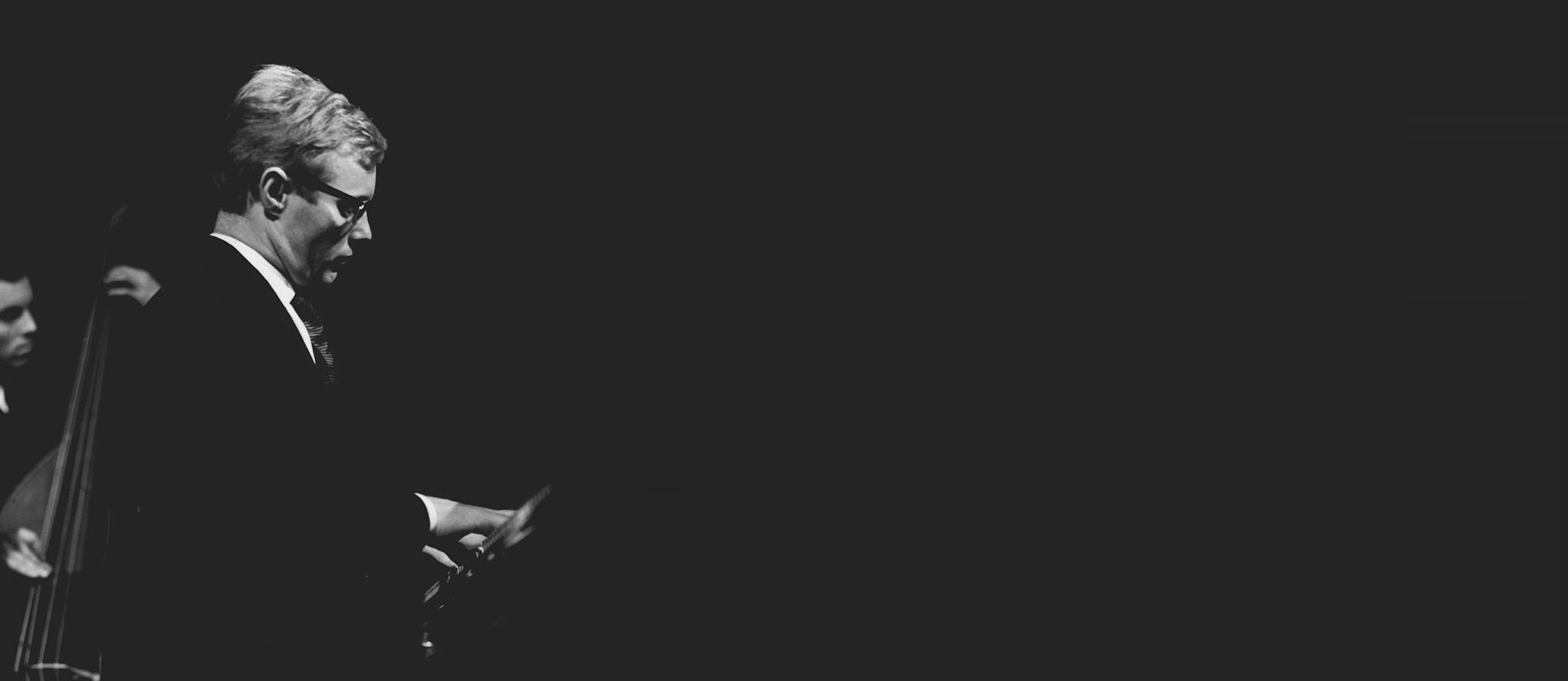
He is best known for his collaboration with Polish director Roman Polański, for whom he composed music for a number of films, such as Knife in the Water and Rosemary’s Baby, both recognized by the American Film Academy. The poignant lullaby theme from the latter, hummed by Mia Farrow, has become one of the most recognizable pieces of film music ever. Despite his relatively short career, Komeda also strongly influenced Polish jazz music, in which he is considered a pioneer of modernity.
by Iwona Lindstedt
He was born on April 27, 1931, in Poznań as the son of Zenobia and Mieczyslaw Trzcinski. His father worked as a clerk at the Bank of Poland, while his mother looked after the house, being at the same time the unofficial owner of a yarn store registered to her brother. His mother was his first piano teacher, and already at the age of four he showed outstanding musical skills – he could pick up and play any song he heard. In 1938, he successfully passed the State Conservatory of Music examinations in Poznan. However, further study was interrupted by the war effort and a severe illness (polio), which he contracted in August 1939. Fortunately, he overcame the disease, although – despite long rehabilitation – he had a slight limp for the rest of his life. The Trzcinski family spent the war years in Częstochowa, where Krzysztof continued his music lessons with a private teacher, focusing mainly on a classical repertoire – Bach, Mozart, Beethoven, and Chopin. After 1945, following a brief stay in Walbrzych, the Trzcinskis settled in Ostrów Wielkopolski. There, Krzysztof studied at a high school and in the afternoons at a music center known as the Municipal Lower School of Music, where he honed his piano playing under Mieczysław Szymański. He also developed his interests in dance, music, and jazz. He listened with interest to foreign radio stations that broadcast jazz, and at school, he formed a band in which he played the piano and accordion. The big band was called “Carioca” and, under his direction and arrangements, performed at school, other events, and dances.
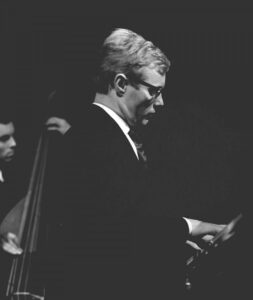
Although Krzysztof’s passion for music flourished, his parents suggested that he consider a more practical profession. Thus, in 1950, after receiving his high school diploma, he began studying medicine in Poznan. It was a conscious decision. Medicine interested him greatly, and he realized he would not become a keyboard virtuoso. However, he did not give up music. He formed a band again, consisting of eight future doctors, who met in the hall of the Collegium Anatomicum to sing and play together. In the early 1950s, Krzysztof Trzcinski – for he still used that name then – also often traveled to Krakow, where private jazz concerts were held in the apartment of bassist Witold Kujawski, who had also graduated from the Ostrów Gymnasium. This activity occurred during the so-called “catacomb period” and contributed significantly to Trzcinski becoming a part of the Polish jazz scene.[1] After working with various musicians – including Jerzy Grzewinski’s Dixieland band and the Krakow-Lodz band Melomani – he created his own band, the Komeda Sextet.
This ensemble was a spectacular success at the 1st National Jazz Music Festival in Sopot (Sopot Jazz Festival) in August 1956. At that time, only modern jazz was played, including the famous “fantasia” on a theme from the three-voice invention of the great Jan Sebastian – Memory of Bach, and symbolically, a new era of jazz in Poland began. From that moment on, music absorbed Komeda completely. For career purposes, he adopted the intriguing nickname “Komeda,” a sobriquet given to him by friends from childhood when playing together outdoors. Although he initially tried to reconcile this path with his passion for his work as a doctor (he specialized in laryngology), he gave it up entirely in 1957 in favor of an uncertain fate as an artist.
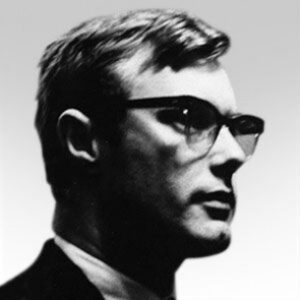
Komeda’s first legendary sextet featured Jerzy Milian on vibraphone, Jan Ptaszyn Wróblewski on baritone sax, Stanislaw Pludra on alto sax, Jozef Stolarz on double bass, and Jan Zylber on drums. These same musicians, together with the Melomani (composed of Jerzy Matuszkiewicz, Andrzej Trzaskowski, and Witold Kujawski, among others), appeared in the first Polish film about jazz in 1957. It was titled Jazz Talks – Hot Club Melomani & Komeda Sextet and was directed by Andrzej Brzozowski. It includes a recording of a piece written especially for the film, entitled “Gillespie Memory,” which had been performed earlier at the 2nd Jazz Music Festival in Sopot.
In the autumn of the same year, Komeda composed film music for the first time, which unexpectedly revealed his full compositional potential and artistry. Then, the score for Roman Polański’s famous etude, “Two Men with a Wardrobe” was created. With a leitmotif played on the soprano saxophone, which – constantly transformed – creates an analogy to the visual layer: the adventures of two men are “fused” with the wardrobe. From then on, both forms of creative activity – playing jazz and composing for film – complemented each other in Komeda’s life. His compositions have featured in 68 films, 48 of which were made in Poland. This collection includes, among others, music for Janusz Morgenstern’s films Goodbye, Till Tomorrow (1960) and Tomorrow’s Premiere (1962), Jerzy Hoffman’s western Law and Fist (1964) – featuring the atmospheric ballad (“Before the Day Rises…”) sung in front of Edmund Fetting to the words of Agnieszka Osiecka Andrzej Wajda’s Innocent Sorcerers (1960), Leonard Buczkowski’s Interrupted Flight (1964) and Jerzy Skolimowski’s Barrier (1966).
In addition, he composed music for four films by Danish director Henning Carlsen (Hvad med os? Kattorna, Sult, Mennesker mødes og sød musik opstår i hjerte), as well as a number of works by Roman Polański – When Angels Fall (1959), Thick and Skinny (1961), Suckling (1962), Knife in the Water (1962), Cul-de-sac (1966), The Fearless Vampire Killers (1967) and Rosemary’s Baby (1968). His contemporaries emphasized that film music was as crucial to Komeda as his work in jazz. In turn, when responding to a survey announced in 1961 by “Film Quarterly,” Komeda confessed: “In every film, I find something new for myself that I have never used before.” The closeness of the two worlds is evidenced by the fact that the rearranged music for Cattorna functions as an autonomous jazz piece – while its structure has a form similar to a rondo, as the returns of the central theme (refrain) are interspersed with improvisations (couplets).
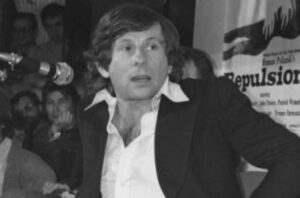
Thus, keeping in mind this mutual influence of jazz on film music and film on jazz music, it must be noted that Komeda, having gained exceptional flexibility in his handling of musical material through his work for cinema, remained an iconic jazz musician. So, let us list some key moments in his career. In 1958, he accompanied Dave Brubeck on his famous concert tour – the first visit to Poland by an American jazz band after the war. That same year, he and his band, the Jazz Believers, recorded a test album (only 12 copies were issued) for the RCA Victor label. In 1960, he presented a program from the Jazz and Poetry series for the first time at the Jazz Jamboree festival and soon began his career abroad, performing in clubs and at jazz festivals in Denmark and Sweden. In 1963, he recorded an album of Ballet Etudes for the Copenhagen-based Metronome label, the first staging of which took place a year earlier at the Jazz Jamboree, choreographed by Jerzy Gruca.
In 1965, together with Tomasz Stańko (trumpet), Zbigniew Namysłowski (alto saxophone), Günther Lenz (double bass) and Rune Carlsson (drums), he recorded the album Astigmatic at the National Philharmonic Hall, considered by many critics not only the most important Polish jazz album but also the most essential album of European jazz, exhibiting a radically different style from American jazz and a unique kind of ensemble sound.
In May 1967, for the Electrola label, he recorded – in collaboration with prominent German jazz critic Joachim Ernst Berendt – the album Lyrik und Jazz: Meine Süsse Europäische Heimat, inspired by his earlier project Jazz and Poetry. Komeda’s compositions here formed a musical layer for poems by Polish authors (including Maria Jasnorzewska-Pawlikowska, Wisława Szymborska, Zbigniew Herbert, Konstanty Ildefons Galczynski, Czeslaw Milosz) recited in German. He presented his last major composition – Nighttime, Daytime Requiem, dedicated to the memory of John Coltrane – at the Jazz Jamboree that same year, bidding farewell to the Polish audience before leaving for the United States.
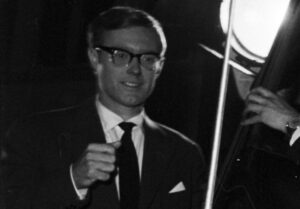
He traveled to Los Angeles at the invitation of Roman Polański, who was filming Rosemary’s Baby at the time and wanted Komeda to compose music for the film. The three-year contract with Paramount Pictures Corporation was undoubtedly an excellent opportunity for the hitherto unknown composer from Poland, and Komeda seized it. Within a few months, he had achieved success, both artistically (with both Golden Globes and Grammy Award nominations) and financially. Composing what promised to be a great score for his next film, The Riot, directed by Buzz Kulik, was interrupted, however, by a tragic accident. His fall from a high slope was not initially regarded as severe, nor did it cause any immediately alarming symptoms. However, the resulting subdural hematoma caused a traumatic brain injury and eventually caused the musician to lose consciousness. Despite emergency surgery in a Los Angeles hospital, Komeda never regained consciousness and remained in a coma. He was eventually transported to Warsaw, where he died on April 23, 1969, four days short of his 38th birthday. He was buried at Powązki Cemetery.
In recollections of Komeda, there is often a recurring conviction about the unique and timeless character of the music he created. Polish critic Zygmunt Kałużyński claimed without hesitation that it is distinguished by “a rare and in jazz unique ability to shape a powerful, evolving dramaturgy, something that is the negation of jazz.” In other words – Komeda’s originality lies in convincingly building the form of the work into a novel-like drama, with exposition, climaxes, and their solutions. It is also noted that he could construct repeated motifs like no one else, arousing in his listeners a sense of anxiety and anticipation – as if a reflection of emotions experienced by himself.
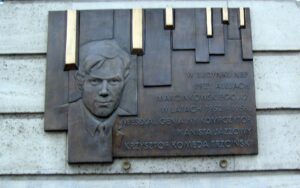
As a pianist, he developed his unique style, combining many heterogeneous elements with his characteristic lyricism, specific harmonic atmosphere, and general mood, which audiences usually identified as Slavic-romantic. As a composer, he worked quickly, creating carefully thought-out sketches that came to fruition and complemented previously unforeseen material during the first rehearsal with specific musicians. His goal was, as he put it, “personal music,” and this is what he left behind – a body of work clearly distinguishable from the works of other authors.
[1] This refers to a period when Polish jazz was restricted by the authorities, and jazz musicians formed underground or “catacomb” jazz clubs and gatherings where they could play their music in a less regulated environment.
Author: Prof. Iwona Lindstedt – Professor at the Institute of Musicology, University of Warsaw
Translation: Alicja Rose & Jessica Sirotin