The central place in the Polish vision of regaining independence in 1918 is occupied by Józef Piłsudski. However, many other politicians, military officers, and social activists made noteworthy contributions to this cause, including the ‘Commander’s’ loyal chief of staff and one of his most important successors: Lieutenant General Kazimierz Sosnkowski.
by Tomasz Leszkowicz
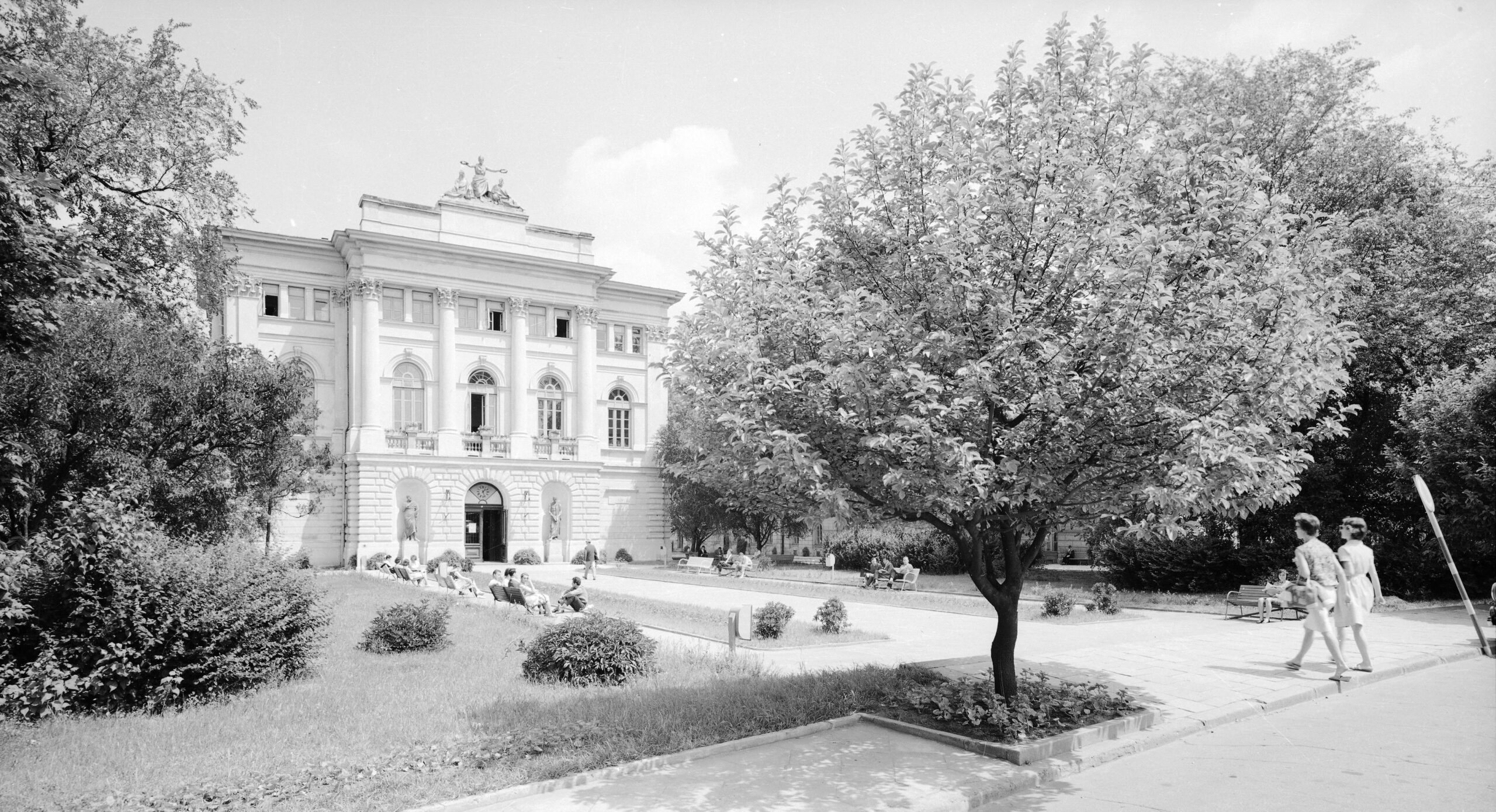
Born on 19 November 1885 in Warsaw, the future general, son of Józef, a chemical engineer and amateur composer, and Zofia (née Drabińska), was raised in a patriotic atmosphere. From 1896, he attended a classical gymnasium in the former Polish capital, but was not permitted to take his final exams due to suspicions of belonging to an illegal self-education club. Forced to move to St. Petersburg, he graduated in 1904 as a top student with a gold medal. He then returned to Warsaw and began studying architecture at the University of Technology.
From combatant to ‘Chief’
Sosnkowski entered adulthood at a very special time – a revolution was starting in Russia and the Kingdom of Poland, sparked by the failed war with Japan and the anachronism of the tsarist state. The young student became close to the illegal Polish Socialist Party, primarily in its role as an organiser of the fight against the occupying power. In February 1906, he attended the Polish Socialist Party congress in Lwów, where he met the already famous party leader Józef Piłsudski, with whom he would become politically involved for the next three decades. Sosnkowski joined the Combat Organisation of the Polish Socialist Party and, after completing a combat course, became deputy and then commander of the Warsaw district. He led, inter alia, the attack on the tsarist police (known as the bloody Wednesday of 15 August 1906), which caused panic among the Russians and their retreat from the city for several days. However, the revolution was waning, and a split occurred within the Polish Socialist Party between Piłsudski’s independence faction and the left, which sought cooperation with the Russian revolutionaries.
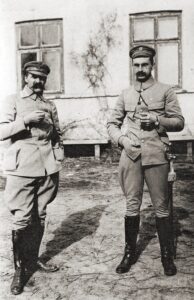
As Piłsudski was preparing the final campaign of the combatants – an attack on a postal train near Bezdonys, the would-be architect (Sosnkowski attempted to continue his studies in Milan and then in Lwów), likely inspired by his mentor, launched a new chapter in the pro-independence resistance movement. In June 1908, in Lwów, representatives of several patriotic groups established the Union of Active Struggle – a non-partisan organisation focused on long-term independence efforts and, above all, military training. Sosnkowski became the Union’s leader, involved in building its structures and engaging other groups.
The international situation and the recurring spectre of a European war favoured the Polish cause in Galicia. The Union took advantage of Austrian law on paramilitary organisations. In 1910, a legal Riflemen’s Association was established, with Piłsudski (who had been head of the Union since 1912) as its commander and Sosnkowski as its chief of staff. The riflemen’s movement (which had branches in the Russian and Prussian partitions, as well as abroad) included over 24,000 members, some of whom completed officer and non-commissioned officer courses, and all of whom received basic military training. These were among the main arguments in Piłsudski’s political and intelligence talks with the Austrians.
The Legion epic
When a diplomatic crisis erupted in Europe in the summer of 1914, ending in the war between Russia, France, and Great Britain against Germany and Austria-Hungary, Piłsudski’s milieu decided to exploit the circumstances to spark an uprising in the Kingdom of Poland. Cadre companies were formed from the riflemen that were to initiate fights. The first of these companies marched out from the Oleandry district in Krakow on 6 August 1914. Two days later, Piłsudski and his chief of staff, Sosnkowski, whom the soldiers called the ‘Chief’, joined the units. For the next few years, he became one of the ‘Commander’s’ closest associates, his right-hand man, confidant, and man for special assignments. Sosnkowski, inter alia, assumed command of a cadre battalion in the battle for Kielce, from which he was forced to retreat under pressure from a Russian cavalry division. However, the ‘Commander’ managed an orderly retreat and recaptured the city on 22 August. The attempt to incite an uprising was unsuccessful, however. Polish politicians loyal to Austria secured the formation of the Polish Legions, which included Piłsudski’s units, in late August of 1914.
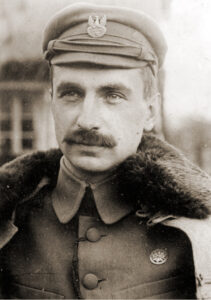
From then on, for nearly three years, Kazimierz Sosnkowski (promoted to the rank of lieutenant colonel) became involved with the Legions, serving as Piłsudski’s chief of staff in the 1st Infantry Regiment and the 1st Brigade of the Polish Legions. In this role, he was responsible for translating the ‘Commander’s’ thoughts and intentions into concrete orders. He frequently took command of separate units or filled in for the absent Piłsudski. Sosnkowski’s most important battle was the battle of Łowczówek near Tarnów (22–25 December 1914), when the 1st Brigade filled a breach in the Austro-Hungarian front. Under the command of the ‘Chief’ (awarded the Order of the Iron Crown for this feat), the legionnaires retook positions occupied by the Russians and, in spite of difficult terrain and weather conditions, survived enemy counterattacks.
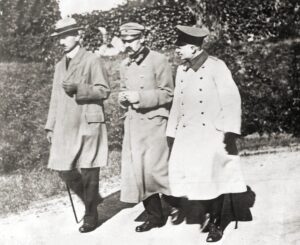
Sosnkowski served several times as his mentor’s political emissary. In early 1917, he was Piłsudski’s deputy on the Military Commission of the Provisional Council of State, subordinated to the Germans and Austrians. He devoted six months of work at the ersatz ministry of war to laying down the organisational foundations for the future Polish Army. However, already in July 1917, the ‘Commander’ decided to break with the Central Powers, leading to the so-called oath crisis in the Legions – most of their soldiers refused to swear an oath of allegiance to the two emperors, which resulted in the disbandment of the 1st and 3rd Brigades. The ‘Chief’, like his mentor, was arrested by the Germans. Sosnkowski was imprisoned in Gdańsk, Spandau, and Wesel-on-the-Rhine, and finally, in September 1918, sent to the fortress in Magdeburg, where Piłsudski was also imprisoned.
Organiser of the Polish Army
The outbreak of revolution in Germany in the autumn of 1918 changed the situation in Europe. Piłsudski and Sosnkowski left prison and reached Warsaw on 10 November, where, the following day, the ‘Commander’ assumed supreme command of the Polish Army, and shortly thereafter, full civilian authority. Promoted to a general, the ‘Chief’ then returned to organisational work as commander of the Warsaw General District. In March of the following year, Kazimierz Sosnkowski became second deputy minister of military affairs. His task was to create a Polish army of nearly one million men, equip the soldiers with the necessary weapons and equipment, and dispatch them in batches to the frontlines of the developing war against the Ukrainians, Czechs, and Bolsheviks, among others.
The general was sent to the front once: when Mikhail Tukhachevsky’s so-called first offensive began in Belarus in May 1920, creating a breach in the Polish defence. Sosnkowski became commander of the newly formed Reserve Army and played a key role in driving the Bolsheviks from the occupied territories in the first half of June. For this operation, he was awarded the Commander’s Cross (2nd Class) of the Order of Virtuti Militari, as one of 12 commanders of the Polish Army at the time. The ‘Chief’ made his greatest war-time contribution in organisational matters, particularly at the critical moment of the Bolshevik offensive on Warsaw in August 1920, when he was appointed minister of military affairs in the government of Wincenty Witos. His greatest achievements included disciplining the army, sending new recruits to the front, acquiring weapons and equipment, and at the climax of the battle of Warsaw, organising the defence of the capital.
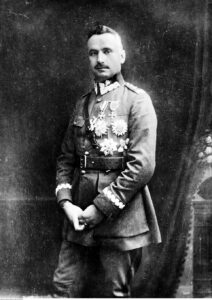
He held the position of minister (with a six-month break) until February of 1924. He actively participated in the talks with the French on a military alliance in 1921, and in the disarmament conference in Geneva in 1925. As commander of the 7th Corps District in Poznań, in May 1926, he faced the most difficult choice: should he support Marshal Józef Piłsudski’s coup d’état or remain faithful to the government? Under these circumstances, Sosnkowski attempted suicide, but the bullet missed his heart by millimetres (the general was left-handed, which made it impossible to aim the gun precisely). The accusation of faking a suicide astuck with the ‘Chief’ for years to come, casting a shadow over his relationship with the ‘Commander’, among other things. Following his recovery, the general returned to active duty, fulfilling numerous important military (army inspector and deputy marshal during his absence) and social duties. Owing to his position, he was a natural candidate to succeed Piłsudski; however, after Piłsudski’s death in May 1935, President Ignacy Mościcki appointed Major General Edward Rydz-Śmigły as Inspector General of the Armed Forces.
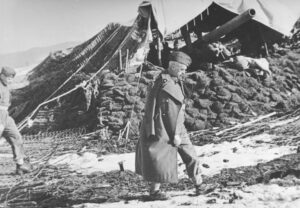
This put the ‘Chief’ on the sidelines. The new commander-in-chief neither consulted him on plans for the war against Germany nor assigned him any tasks related to national defence. After 1 September 1939, Sosnkowski applied for combat assignments (including commanding the defence of Warsaw), but was only entrusted with secondary duties. It was not until the night of 10–11 September that he became commander of the Southern Front. This decision was made at a time when the Polish defence was collapsing and the general could not be provided with adequate forces. On 13 September, he flew to Przemyśl, where he took command of the depleted units, marching eastward to break through to Lwów. Although his units achieved local successes (e.g. the defeat of the SS regiment ‘Germania’ near Mużyłowice on the night of 15–16 September), and Sosnkowski himself did not avoid commanding on the frontline with a rifle in his hand or directing the fire of anti-tank guns, the surrounded troops were forced to capitulate.
The hardship of exile
Kazimierz Sosnkowski refused to surrender and made his way to Hungary and subsequently to the Polish Army in France. The general, considered as recently as September 1939 as a potential successor to President Mościcki, was the most senior military man in exile, regarding both rank and experience. In November 1939, the prime minister and commander-in-chief, General Władysław Sikorski, appointed him to the government as deputy prime minister responsible for the affairs of the occupied country. He also entrusted him with the position of commander of the Union of Armed Struggle – a clandestine military organisation tasked with resisting the occupiers and preparing for a nationwide uprising. Sosnkowski, under the pseudonym of ‘Józef Godziemba’ (from his noble family coat of arms), led the Union from France. He held the position of commander until June 1940 (when Poles were evacuated to Great Britain), laying down the foundations for the future success of the Union and its successor, the Home Army. For the following year, he focused on domestic affairs, but remained in a growing conflict with General Sikorski’s milieu. He resigned from the government in July 1941 due to the failure in resolving the issue of the eastern borders of Poland in the treaty with the Soviet Union.
Following the death of General Sikorski in a plane crash in Gibraltar on 4 July 1943, Sosnkowski was appointed the new commander-in-chief of the Polish Army. He continued the expansion of the Polish Armed Forces in the West, striving to ensure their greatest possible autonomy and judicious use in combat. He remained sceptical about the possibility of reaching an agreement with the USSR after the severance of diplomatic relations in the spring of 1943, and thus found himself in an escalating conflict with Prime Minister Stanisław Mikołajczyk, who sought to strip him of his powers. The general was critical of Operation Tempest and the idea of a Warsaw uprising, pointing out Joseph Stalin’s anti-Polish policies and potentially unnecessary casualties. In July of 1944, he was inspecting the 2nd Polish Corps in Italy, which deprived him of any real influence on the decision to initiate fights in Warsaw. However, upon returning to London, he actively sought support for the insurgents and recognition of their veterans’ rights. In official speeches, he spoke critically of the Allies’ attitude toward Poland, accusing the British and Americans of failing to provide assistance. On 30 September 1944, under pressure from the Allies, he was dismissed from his position.
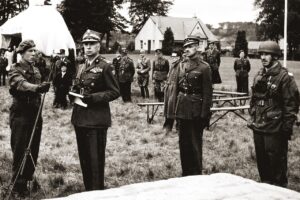
In November 1944, General Sosnkowski left for Canada, where he settled with his family after the war. He bought a farm in Arundel, near Montreal, where he worked to support his family. He remained an active participant in exile life, especially as the Cold War intensified in the late 1940s. In November 1952, he met with both candidates for president of the United States. In the same year, he made an unsuccessful attempt to unite the Polish communities in exile, which had been divided since August Zaleski had taken office as president of the Republic of Poland in exile in 1947. In the final years of his life, the ‘Chief’s’ health deteriorated. He died on 11 October 1969 in Arundel. His ashes were interred at Montmorency Cemetery in Paris, and on 12 November 1992, in accordance with the general’s wishes, they were transferred to Poland and interred in the crypt of St John’s Archcathedral in Warsaw.
Kazimierz Sosnkowski was one of the most distinguished representatives of the generation that fought for Poland’s independence in the early 20th century, and for the next four decades left its mark on the politics of the reborn state. Although he spent the most active years of his life in military uniform, he was a true Polish intellectual – he spoke eight languages, played the piano and painted, wrote poetry, and translated the works of Johann Wolfgang von Goethe, William Shakespeare, Mikhail Lermontov, and his beloved Charles Baudelaire, among others. He is remembered primarily as an outstanding organiser and one of the fathers of independent Poland, as well as an indomitable commander-in-chief who opposed the subordination of Poland to the Soviet Union, for which he was attacked by communist propaganda over several decades.
Author: Tomasz Leszkowicz, PhD
Translation: Katarzyna Jopek