In the world of luxury cosmetics, the name Helena Rubinstein is synonymous with innovation, elegance, and unquestionable success. For over a century, it has been a name that has been associated with excellence, sophistication, and a bold approach to beauty. Yet, behind this glittering symbol of luxury lies the extraordinary story of a woman who, through determination, vision, and an unwavering belief in her ideals, transformed an entire industry.
by Nina Kucharczyk
From humble beginnings in Krakow, Helena Rubinstein built a global empire from the ground up that not only revolutionized the way women think about skincare but also transformed the very nature of the beauty world. She was a pioneer of modern marketing, an ambassador for a scientific approach to cosmetics, and living proof that passion combined with courage can become a force capable of transcending the boundaries of era, culture, and gender. Her story is not just a tale about good looks –it is a saga of ambition, independence, and an extraordinary woman who decided to make an art out of beauty.

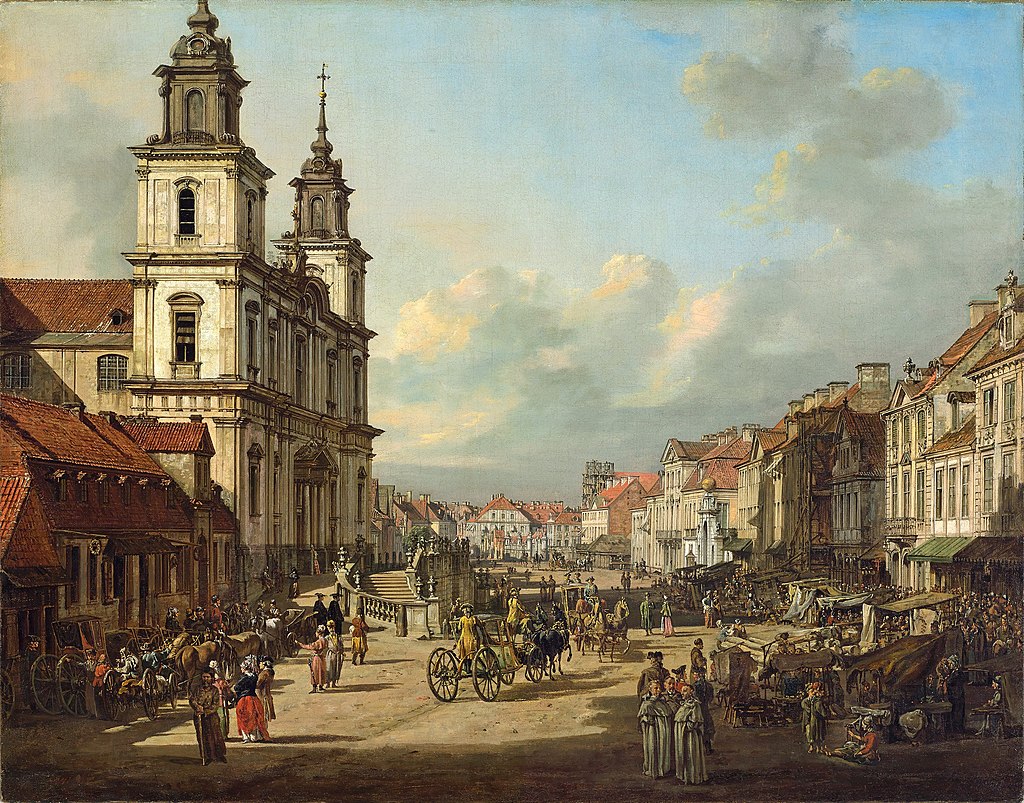
Her path to the top began in the humble surroundings of Podgórze, near Kraków, where she was born on December 25, 1872, as the eldest daughter of a Jewish merchant. Given the name Chaja, she grew up in the busy Kazimierz district, where, amid a large group of siblings and ongoing family financial difficulties, she learned her first lessons in entrepreneurship. From a young age, she stood out for her extraordinary charisma and a keen sense of observation. Her mother instilled in her eight daughters that beauty care was not a whim but an investment in a better future. This teaching, together with a homemade cream recipe, became the symbolic dowry Chaja took with her when she left Poland in search of a better life. At the age of 25, aboard a ship to Australia, Chaja became Helena, a person the world would remember.
In her suitcase, Helena carried not only hope but also a concrete plan: twelve jars of cream, whose recipe had supposedly been given to her mother by a local doctor. In Australia, working as a nanny and a waitress, she quickly spotted an opportunity. She delicately named her cream “Valaze” and began selling it, spinning a tale of magical herbs from the Carpathians. Her smooth, blemish – free complexion was the best proof of its effectiveness, and the cream, despite its high price, became a sensation. It was then that one of her key strategies was born: “If it’s expensive, it must be good.” The high price didn’t discourage customers; it attracted them, becoming synonymous with luxury and quality. Soon, she opened her first beauty salon in Melbourne. It was no ordinary shop. Helena invented the concept of the “customer experience.” She subjected each woman to a “test” under a special light that highlighted imperfections, and then recommended a personalized, multi – step treatment. In this way, she also unconsciously created the concept of a “product line,” encouraging customers to purchase entire sets and creating the feeling that using the cream alone, without a suitable cleanser or toner, would be ineffective.
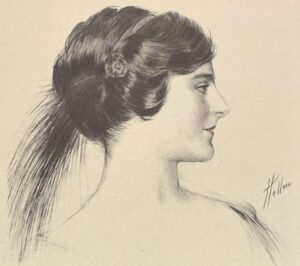
Success in Australia was only the beginning. Helena, now known as “Madame” Rubinstein, set out to conquer Europe and then the United States. Her salons in London, Paris, and New York became synonymous with elegance. She also passionately cultivated her image. Long before the term existed, she was the “first influencer.”. Her eccentric style, impeccable presence, and boundless energy served as a living advertisement for her products. Clients didn’t just buy cream, they bought the promise that they could become even a little as charismatic as she was. Yet her life is also a masterfully woven legend. She deliberately obscured her past: rejuvenating herself, altering the circumstances of her departure from Poland, and creating her own heroic narrative. This ability to create a compelling vision of reality also permeated her marketing. She was a master of so – called “terror marketing.” She didn’t simply sell creams but offered solutions to problems she herself exaggerated. A pioneer, she utilized the language of pseudoscience, employing terms like “hormones,” “vitamins,” and “active ingredients” to give her products an aura of scientific legitimacy. She largely shaped the language the cosmetics industry still uses today, introducing terms like “skin type” and “comedogenic” into everyday use, while simultaneously making customers feel that, without her expert intervention, their skin was in constant danger.
A passion that went hand in hand with building her empire was collecting. Her appetite for beauty didn’t end with cosmetics. Over time, Helena began to amass art with equal passion and determination, transforming her numerous apartments in Paris and New York into private museums. Her collection was as eclectic and affulent as her own personality. Paintings by the most prominent contemporary artists, such as Pablo Picasso, Henri Matisse, and Joan Miró, hung alongside African sculptures, Victorian chairs, Chinese tables, and Turkish lamps. Salvador Dalí, with whom she was friends, even painted a mural in her New York apartment.
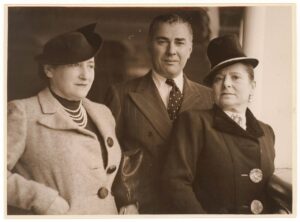
The collection was not merely a billionaire’s whim; it was a strategic element of cultivating her image. Art enshrined her as an intellectual, a woman not only wealthy but also deeply engaged with the artistic avant – garde. Her homes, filled with these treasures, became the backdrop for lavish parties attended by writers like Ernest Hemingway and James Joyce, as well as fashion designers like Coco Chanel and Christian Dior. Thanks to these connections and entourage, Helena Rubinstein was no longer just an entrepreneur – she was a patron of the arts and an essential figure in the cultural world, which greatly enhanced the prestige of her brand. Writer Michele Fitousi, author of her biography, aptly described her as “the woman who invented beauty,” and her collection was material proof that her definition of beauty extended far beyond a jar of cream.
It’s impossible to understand Rubinstein’s phenomenon without examining her famously fierce rivalry with Elizabeth Arden. It was not just a business rivalry but a personal, almost warlike vendetta. The two women, who reportedly never exchanged a word, hated each other passionately. Yet this rivalry, though ruthless, proved incredibly creative for the entire industry. They competed to open new salons, launch innovations – it was Helena who, having acquired the patent, introduced the world to the first waterproof mascara – and built scientific authority, accelerating the development of the global luxury cosmetics market. This dynamic competition forced both entrepreneurs to constantly raise the bar, with each move becoming an immediate challenge to the other. Helena thought globally, a true citizen of the world who transformed her Polish heritage into an exotic, international legend.
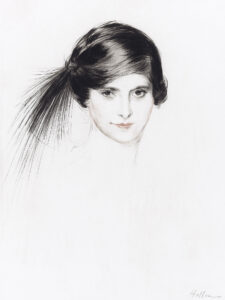
Helena Rubinstein died in 1965, considered one of the wealthiest women in the world, having built her fortune – estimated at $100 million – solely through her own hard work. She remained true to herself until the end: a tireless worker who passionately followed the stock market, yet possessed surprisingly modest culinary habits, serving Krakow sausage at lavish parties, a testament to her strong connection to her roots.
Her empire endures, and her legacy runs deeper than the brand itself. Helena Rubinstein didn’t invent cream, but she did invent the modern cosmetics industry as we know it today. She was a visionary who understood the power of sales psychology, the strength of luxury as a marketing tool, and the incredible power of a personal brand. She started her life as Chaja, an enterprising girl from Podgórze, and she went on to become the “empress of beauty” who forever changed the way the world perceives and buys beauty, proving that the most effective product you can sell is a well-told story and the promise of a better self.
Author: Nina Kucharczyk
Transation: Alicja Rose & Jessica Sirotin