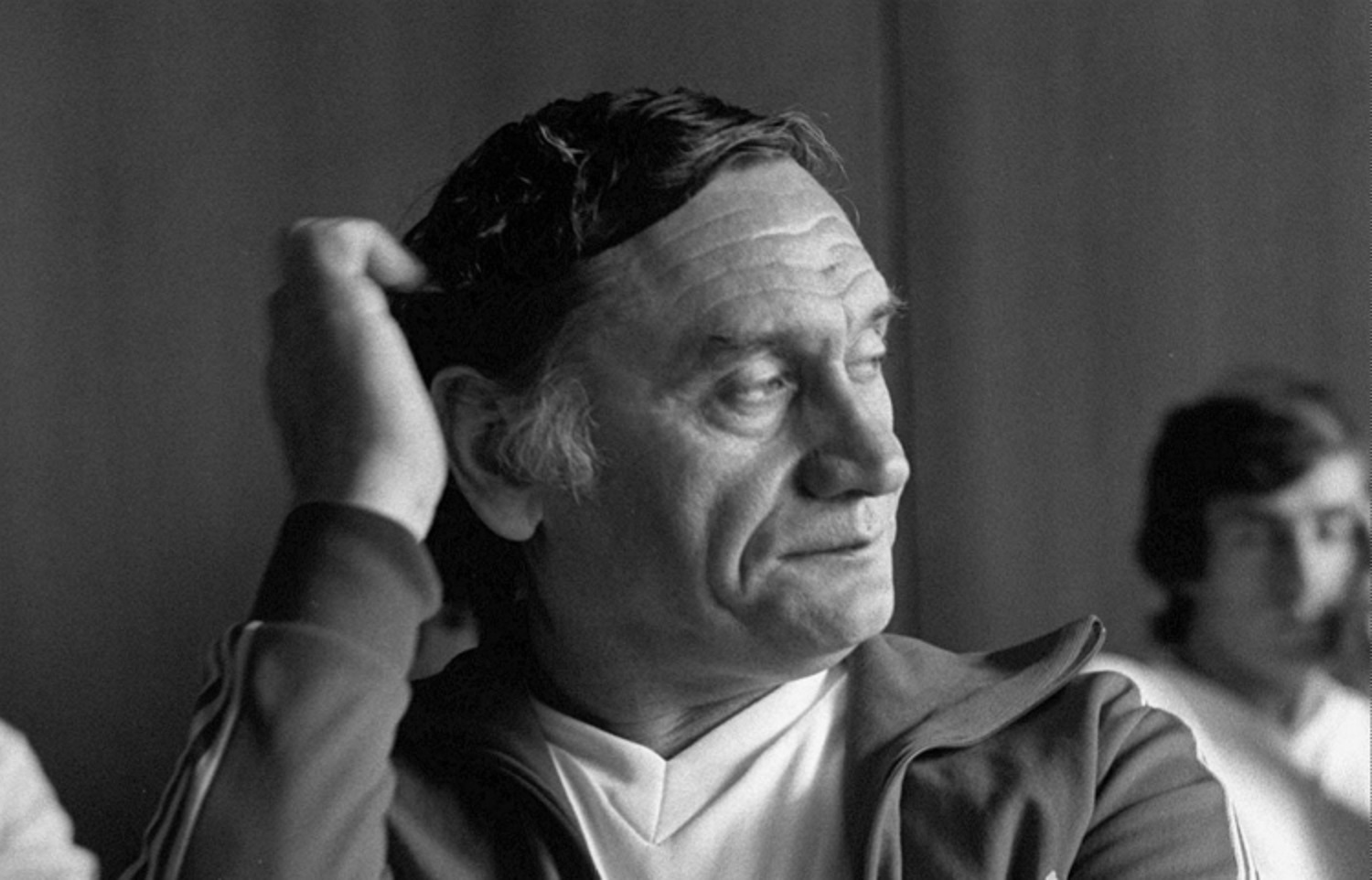
On December 1, 1970, Kazimierz Górski became the national football team coach. Górski, born on March 2, 1921, in Lwów, led the Polish team to its greatest successes; they won two Olympic medals (1972, 1976) and achieved third place at the world championships (1974). Before his coaching career, he was a striker for several Lwów clubs and played for Legia Warszawa after the war. He played one game with the national team.
by Piotr Bejrowski
Górski embarked on his coaching journey without ever having qualified for the European Championship, as advancing to the final tournament was a significantly more challenging task back then than it is now. However, Górski gained the trust and support of the team’s organizers, who gave him the opportunity to rebuild the national team according to his vision. His team went on to make history as the “Górski Eagles,” thanks to his wise choices of players for the team, which was built around the talented “golden generation.” They played many memorable matches and would go on to achieve victories remembered to this day.
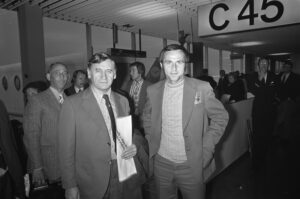
Despite his appearance as a “nice old man,” Górski was an absolute boss in the locker room. He established a hierarchy within the team, and each position had its own ranking. He collaborated closely with the Polish trainers, seeking optimal training and personalized solutions. He avoided conflicts and possessed excellent psychological insight, enabling him to effectively connect with his players and motivate them. He was remembered for football aphorisms: “It’s about scoring one more goal than your opponent scores,” “Sometimes you win, sometimes you lose, sometimes you tie,” “As long as the ball is in play, anything is possible,” and “The ball is round, and there are two gates, either we win or they win.” As you can see, he could convey the fundamental essence of football in a few simple words.
Górski’s team predominantly consisted of players from the Polish league. In a way, the national team’s success was foreshadowed by the strong performances of the Polish clubs, which regularly strove to score the most goals in European cups. In 1968, Górnik Zabrze, led by Włodzimierz Lubański, reached the quarter-finals of the European Champion Clubs’ Cup (the predecessor of the Champions League) and narrowly lost to Manchester United. In 1970, Legia Warszawa, featuring Kazimierz Deyna, advanced to the semi-finals. In the same season, Górnik Zabrze played in the final of the Winners’ Cup.
The Polish team entered the Olympic tournament in Munich as underdogs. However, their fortunes changed after securing three victories in the group stage. In the tournament’s second stage, “Górski’s Eagles” won twice and tied one game, earning a spot in the final against Hungary. Despite being down 0:1 at halftime, the Polish team, led by two goals from Deyna, staged a comeback and emerged victorious with a 2:1 win. The lineup predominantly featured players from Legia and Górnik, with Grzegorz Lato from Stal Mielec as the sole substitute. Upon returning to Poland, the players were greeted as heroes, and September 10 (the day of the match against Hungary) was designated Footballer’s Day. Coach Górski was honored with the Knight’s Cross decoration. The Minister of Foreign Affairs Olszowski also awarded the team a prize “for making the name of Poland famous abroad.”
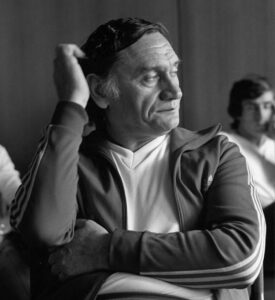
A year later, on June 6, 1973, Górski’s team at the Silesian Stadium defeated England 2:0. Their victory qualified them for the 1974 FIFA World Cup and showed the world that their success in Munich was no accident. Notably, this remains the only victory of the Polish team over the England team in history. Robert Gadocha, a striker from Legia Warszawa, scored the first goal. Włodzimierz Lubański, the team captain, scored the second goal. He was one of the greatest strikers of this generation; the Polish authorities blocked his potential transfer to Real Madrid. He was the best scorer of the Polish national team before Robert Lewandowski surpassed him. Up to this day, he also holds another record as the youngest debutant and goal scorer in the national team when he was 16 years and 188 days old. Unfortunately, his football career was cut short when he sustained a severed knee injury while playing the victorious match against England. The captain’s armband was passed over to Deyna, a central midfielder considered the best Polish footballer of the 20th century.
Jan Banaś, a player from Górnik Zabrze, played alongside Lubański in the winning match against England. He was the son of a German man and a Polish woman, and due to his escape to the West in the 1960s, he was prevented by the Polish authorities from playing for the national team at tournaments held in Germany (the Olympics and the World Championships). In 1974, due to the absence of Górnik’s stars, Górski decided to put two 24-year-olds in the attack next to the experienced Gadocha: Grzegorz Lato and Grzegorz Szarmach. He also included nine players in the 22-person squad who had not appeared in the qualifying rounds. This decision proved to be the right one as Szarmach went on to score an impressive five goals during the tournament. At the same time, twenty-year-old Władysław Żmuda emerged as a solid defensive pillar throughout the matches.
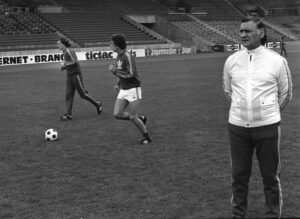
Poland faced a challenging group in the 1974 World Cup, including Argentina and the previous tournament’s runners-up, Italy. However, Górski’s team won both matches, defeating Argentina 3:2 and Italy 2:1. In the third group game, they achieved a resounding 7:0 victory against Haiti. Advancing to the second stage, Polish players played against Sweden, Yugoslavia, and West Germany. After securing two victories, their fate depended on the match against the hosts, West Germany, which is famously remembered as the “match on water.” On July 3, 1974, a heavy rainstorm swept over Frankfurt, turning the grass into a large puddle. Poland lost 0:1, resulting in a playoff for third place against Brazil. In the playoff, Górski’s Eagles won 1:0, with Lato scoring the winning goal. He also emerged as the tournament’s top scorer with 7 goals. Poland displayed impressive attacking play and solid defense throughout the tournament. In the prestigious “Golden Ball” poll, as many as three Górski players were in the top ten for 1974: Deyna (3rd), Lato (6th), and Gadocha (8th).
In 1975, despite a great victory over the Netherlands with a score of 4:1 at the Silesian Stadium, the Polish national team once again failed to qualify for the final tournament of the European Championship. The fans had high hopes for the Olympic Games in Montreal, expecting them to repeat their success in Munich. Górski assembled a team of experienced players. Although he resigned from Gadocha, he decided not to rejuvenate the team. However, the team’s performance in the tournament was below expectations. Despite this, they reached the final, only to be defeated 3:1 by East Germany. In the country, winning the silver medal was perceived as a failure, and the atmosphere around the national team became tense
In July 1976, Górski resigned as coach of the Polish national team. During his tenure, Poland played 73 matches, winning 45 of them. In a later interview, Górski explained that “he became bitter” due to the omission of bonuses and the atmosphere after the Olympics, but that, in retrospect, he regretted the decision: “I was leaving the team at the peak of my coaching career.” He was succeeded by Jacek Gmoch, who led the team to a ranking of 5-8 at the 1978 World Championships, which was widely perceived as an even greater failure than the performance in Montreal.
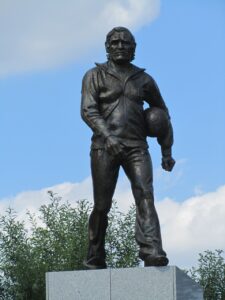
The Coach of the Century passed away in 2006. In 2015, a monument in his honor was unveiled at the National Stadium in Warsaw, and six years later, Górski was designated the patron of this stadium.
Author: Piotr Bejrowski
Translation: Alicja Rose & Jessica Sirotin