Ptasie Mleczko, Torcik Wedlowski, and dark chocolate are more than just sweets. They are iconic products that have become indelibly ingrained in the Polish soul and are recognized far beyond the country’s borders. Behind these flavors stands the legend of the E.Wedel brand, synonymous with the highest quality, confectionery craftsmanship, and over 170 years of tradition. The company’s history is not only a story of business success but also a reflection of the social, economic, and cultural changes that have swept through Poland.
by Nina Kucharczyk
It all began in 1851, when Karol Wedel, supported by his wife Karolina, opened an elegant confectionery shop on Miodowa Street in Warsaw. In its elegant interior, guests could enjoy a taste of hot chocolate–a luxurious delicacy at the time. Interestingly, the company, initially, did not focus solely on sweets. It also offered health-promoting products such as maple malt, cough caramels, and peppermint lozenges, reflecting their practical approach to business.
For the first few years, chocolate in bar form wasn’t the primary focus of the enterprise. The machine used for its production was primarily for testing purposes. It wasn’t until 1854, after a modern steam-roller machine was imported from Paris, that large-scale production began. In 1855, Wedel began advertising chocolate for the first time, a groundbreaking move at the time. The assortment, developed by Karol and Karolina along with two apprentices brought in from Vienna and Berlin, expanded rapidly. It included chocolate bars, dessert chocolate in various shapes, and even a “health chocolate” with apothecary spices.
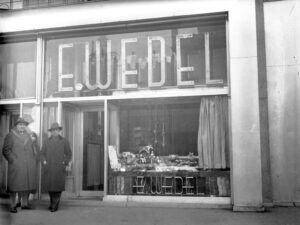
By 1859, Wedel products were already available in several larger cities, including Częstochowa, Lublin, and Grodno. The real breakthrough, however, came when Karol’s son, Emil, took over management of the company. He arrived in Warsaw in 1861, after the confectionery shop on Miodowa Street was vandalized by a mob due to Karol’s alleged failure to pay contributions to patriotic demonstrations. Emil took over, putting his name on the shop’s sign.
It was Emil Wedel who led the company into the era of true industrialization. In 1865, faced with growing demand, he decided to sell the confectionery shop on Miodowa Street and relocate the business to 4/6/8 Szpitalna Street. In 1879, a modern chocolate factory was opened there, equipped with machinery imported from Dresden and Paris, and employing several dozen workers. In 1894, a milestone was achieved with the opening of an “old-fashioned shop” at the corner of Szpitalna and Hortensja (later Górskiego) streets. A place that continues to operate successfully to this day.
Emil, who took over the company as a wedding gift from his father, not only relocated it but also gave it a unique character. In response to counterfeits appearing on the market, he made a brilliantly simple decision: he began signing his handwritten signature on every chocolate bar. This gesture, initially intended as a security measure, eventually evolved into a globally recognizable logo, becoming a symbol of trust and unwavering quality.
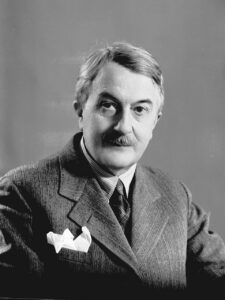
The next era in Wedel’s history is linked to Jan Wedel, Emil’s son. After graduating with a doctorate in chemistry from Freiburg, Jan led the company into the 20th century, combining a scientific approach with bold, modern marketing. In 1908, the company changed its name to “Emil Wedel & Syn,” and after his parents’ deaths, Jan assumed full management. In 1932, the company was transformed into “Fabryka Czekolada E.Wedel, Spółka Akcyjna.”
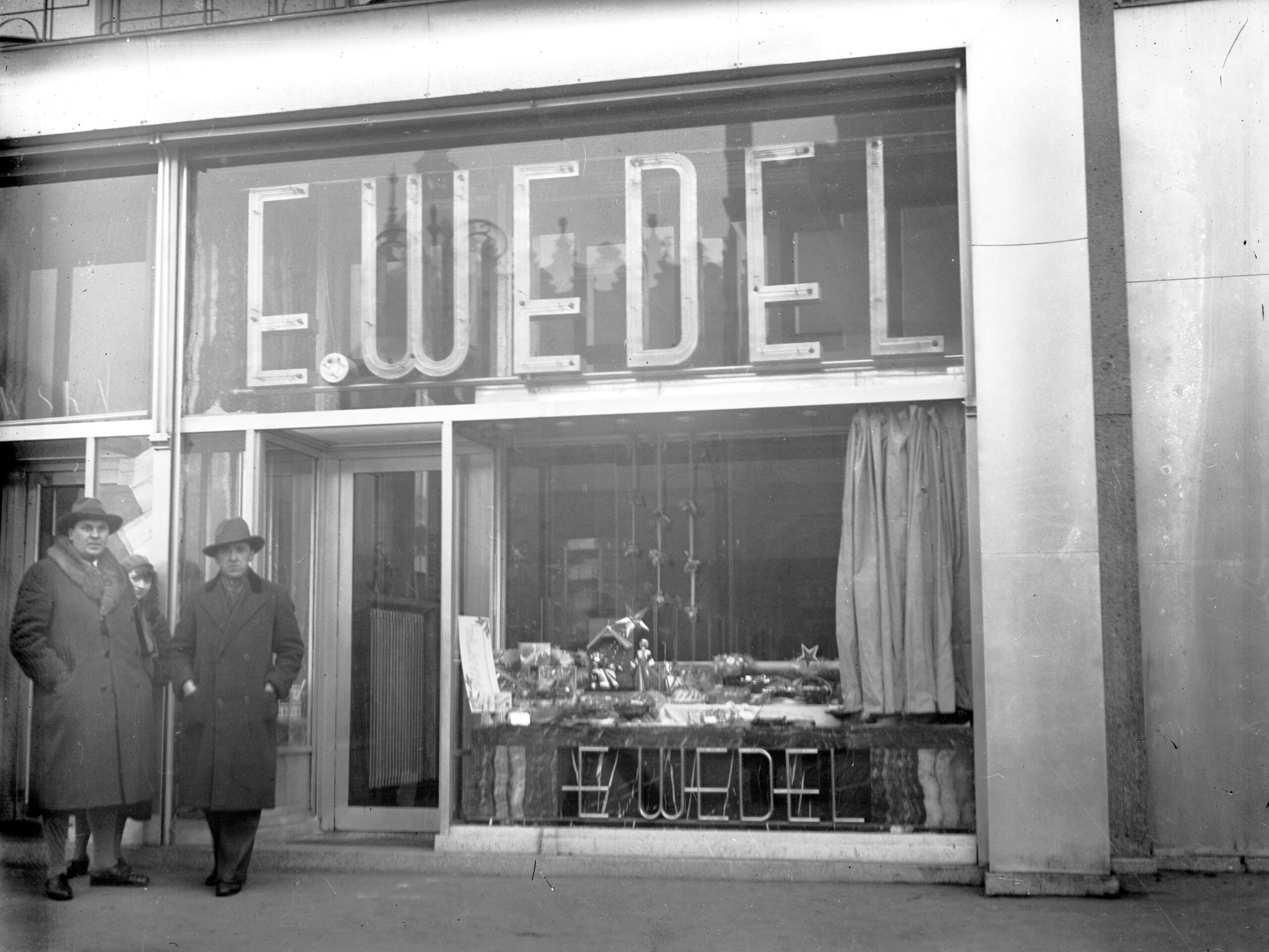
Jan Wedel was a true innovator. Between 1927 and 1931, he commissioned the construction of a massive new factory on Zamoyskiego Street in Warsaw’s Kamionek district. It was an exceptionally modern complex, with machinery imported from Great Britain and Belgium, where automation replaced manual labor in many departments. Jan also cared for his employees, creating one of the most modern social systems in Poland at the time. The factory boasted a nursery, a canteen, a bathhouse, medical offices, and even a theater and performance hall. There was a choir, a brass band, and a drama club. The company newspaper was “Wiadomości Wedelskie.”
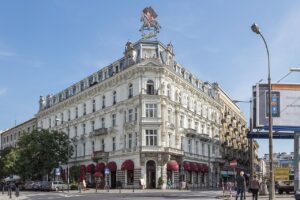
The “Staroświecki Sklep” on Szpitalna Street remained a special place, the spiritual heart of the Wedel empire. Its unique atmosphere saved it from Jan’s planned modernization in 1937. When the owner proposed renovating it, writers and journalists protested, including Jarosław Iwaszkiewicz. The company then announced a competition for memoirs of the store, which Iwaszkiewicz won. He described his childhood visits to the place:
“I had jitters as I walked through the corner door of the shop. I was immediately enveloped by an atmosphere of warmth, light, and the subtle scent of sweets, mingled with the faint aroma of cigars smoked by the gentlemen who gathered there. (…) I enjoyed immersing myself in the atmosphere of a world that was inaccessible to me outside the Wedel store. But what fascinated me most was the glance I cast upwards as I left, at the three blue figures sitting on the ceiling. They, the kind fairies, made the shop seem so extraordinary to me. (…) Now, whenever I enter the Wedel store (…) I so often raise my eyes to the blue-and-pink muses on the ceiling and say to them these thoughts: You only pretend to sell candy, I know, I know. You sit here and weigh not sweets, but bitter things–the passing of time…”
This quote perfectly captures the fact that Wedel sold not only chocolate but also dreams, expressed through its art, marketing, and unique atmosphere.
Jan Wedel was a pioneer in visual marketing. His company placed great importance on packaging, treating it as a vehicle for art and education. Collaboration with outstanding artists of the era was a constant element of Wedel’s creative strategy. One of the most famous artists whose works adorned chocolate products was Zofia Stryjeńska, known as the “Princess of Polish painting.” Her dynamic, colorful, and folklore-inspired works perfectly captured the national spirit of the interwar period. Among the works she created for Wedel’s packaging were her famous depictions of Polish dances, which transported consumers into a world of folk fantasy and elegance. But Stryjeńska was not an exception. The company collaborated with a galaxy of renowned artists and illustrators, turning its packaging into small art galleries that showcased styles from Young Poland and Art Deco to Cubism and Chłopomania (Peasant Mania). As a result, the simple act of buying chocolate became an encounter with high culture, and candy boxes became collectibles.
Jan Wedel understood the power of advertising and image. In 1926, at his request, Italian artist Leonetto Cappiello, considered the father of the modern poster, created one of the most famous advertising graphics of the Second Polish Republic: a boy riding a zebra and carrying chocolate bars. A neon sign with this image still adorns the building on Szpitalna Street.
The company also invested in modern transportation, replacing horse-drawn carts with trucks bearing the E.Wedel logo, and in 1937, even purchased an RWD-13 airplane, which was used for advertising (sweets and leaflets were dropped from it) and transportation.
However, Jan Wedel’s greatest product success, inspired by his trip to France, was Ptasie Mleczko, soft, milky marshmallows covered in chocolate. This innovative product, with a history spanning over 80 years, remains the brand’s flagship and most beloved product to this day, well-known even beyond Poland’s borders.
Wedel packaging was a work of art, and they applied that same care to the chocolate, using only high-quality ingredients and avoiding synthetic additives.
The period of World War II was a difficult chapter in Wedel’s history. The factory operated, but production was directed toward the needs of the German occupiers. Despite this, Jan Wedel was committed to helping those in need. During the Siege of Warsaw in 1939, he opened the company’s warehouses, distributing food to residents and saving many from starvation, although he himself suffered enormous material losses. After the fall of the Warsaw Uprising, he was arrested and sent to a camp in Pruszków. Loyal employees, wanting to protect the factory’s assets from plunder, bricked up some of the products.
In 1949, following the war, the family business was nationalized and renamed the Confectionery Plant of July 22, 1949, named after E. Wedel. Jan Wedel, although initially employed as an advisor, was quickly dismissed from the factory and died in 1960, before the brand was returned to the family.

The political transformation that began in 1989 opened a new chapter. The privatization of Polish enterprises also affected the former Wedel company. Initially, Nestlé showed interest, but ultimately, in 1991, the brand was acquired by the American giant PepsiCo. However, this investment did not align with PepsiCo’s long-term strategy, resulting in the division and subsequent sale of individual factories in 1999. The “Syrena” confectionery factory was acquired by the Finnish company Leaf, the chocolate factory by the British company Cadbury Schweppes, and the biscuit factory in Płońsk by the French company Danone. Today, the E.Wedel brand is part of the Japanese holding company Lotte.
Despite changes in ownership, the tradition and quality of E.Wedel products remain deeply rooted in the hearts of Poles. The “Staroświecki Sklep” on Szpitalna Street continues to attract lovers of authentic chocolate, while Ptasie Mleczko, fudge, Torcik Wedlowski, and Wedel chocolates remain integral elements of Polish culinary culture, recognized abroad as well. The story of three generations of the Wedel family: Karol, Emil, and Jan, is one of passion, innovation, and steadfastness that has forever etched itself into the history of Polish industry. E.Wedel is more than just a brand—it’s a true chocolate legend.
Author: Nina Kucharczyk
Transation: Alicja Rose & Jessica Sirotin