
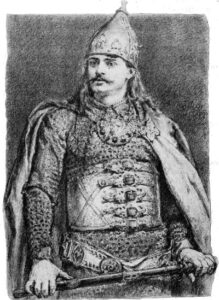
Prince Bolesław III (Wrymouth) at the end of his rule wished to avoid fratricidal fights for power at all costs. Thus he established the succession law with the senioriate system. Unfortunately, history mocked his good intentions.
by Piotr Bejrowski
Bolesław III (1086–1138) was a ruler who deferred to the policy pursued by his illustrious ancestor, the first Polish king, Bolesław I the Brave. The chronicler Gallus Anonymous wrote that the triumphant prince was “exalted to heaven in praise.” He was remembered as a brave commander who countered the German attack, joined the Duchy of Pomerania and established Christianity in the region. After his death, however, Poland experienced a long period of regional disintegration (1138–1320) during which its importance in Europe decreased.
Bolesław III had five sons who reached adulthood. In order to avoid the devastating power disputes that he had experienced over the years with his older brother Zbigniew, he decided to divide the country among his sons and establish a supreme ruler. His political will did not have a written form, but the concept of the succession of power was developed and approved a few years before Bolesław’s death in 1138. His sons had time to get used to it during his lifetime.
He designated one district for each of the four sons. The eldest Władysław II (later called the Exile) received Silesia, Bolesław IV (later called the Curly) – Mazowsze, Mieszko III (later called the Old) – Wielkopolska, Henryk (after reaching his working age, i.e. political adulthood) – the land of Sandomierz. The youngest, Kazimierz II (later called the Righteous), was probably a posthumous child and inherited the Sandomierz land only after the childless Henryk’s death in 1166. As part of the so–called system of the principate, the senior district was also established including Krakow, the Łęczyca–Sieradz land, the Kalisz land with Gniezno, part of Kujawy and Gdańsk Pomerania. This district was adjacent to all other districts. The eldest in the Piast family was to receive it, together with the title of princeps, that is, the supreme prince.
Was it a good idea? After the reunification of the state in the 14th century by Władysław Łokietek and Kazimierz the Great, it was regarded very critically. 19th century historians, writing at a time when Poland was under partitions, were similarly critical – the division of the country seemed akin to treason. With time, however, researchers softened their assessment, arguing, inter alia, that the adopted political solution was in line with the spirit of the times, and had the support of the mighty and the clergy. The system of that time made it possible for one dynasty to hold power. Similar solutions were adopted in Russia and the Czechia. Significantly, the “succession law” was condemned by Jan Długosz (15th century), who was a chronicler during the reign of Kazimierz Jagiellończyk, while Wincenty Kadłubek, who kept writing the chronicle at the end of the 12th and the beginning of the 13th centuries, saw in it a concern about the future of the country by its ruler. Although it was not perfect, according to the chronicler, it could be a transitional stage to strengthening the state. However, this did not happen.
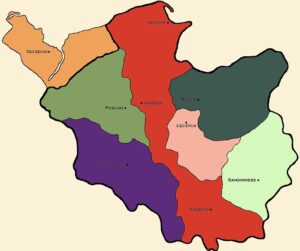
The first conflict among the sons of Bolesław III broke out after the death of Salome von Berg, the mother of the four youngest heirs. In 1144, the juniors opposed their half-brother and led to the expulsion of Władysław II from the country. In the queue for supreme power, seniority was to be the overriding principle. At least, that’s how it was at first. The next princeps was Bolesław (later Bolesław IV). The custom, however, provided for the possibility of legalizing the power acquired at the expense of an older member of the family. If it was widely believed that the senior did not exercise proper government, then, with the support of the political power base, it was possible to replace the older representative of the dynasty with the younger one. This happened in 1177 when Casimir II the Just broke the principle of the senioriate, removed Mieszko III the Old and took over the rule in Krakow.
In the 13th century, the process of district breakdown in Poland deepened. Subsequent districts were divided into smaller ones, often leading to numerous internal disputes. However, despite the weakening of the country’s position and the growing external threat (from the Teutonic Order brought into Poland in 1226, who claimed the right to Pomerania and the Lubuskie region of Brandenburg, and from the Mongols devastating the Piast state), there was still a sense of national bond within the dynasty. This led to the revival of the idea of a united Polish state. One of its most important initiators was Prince Przemysł II of the Wielkopolska line of Piasts. In 1295, he was crowned king of Poland. After his death, most of the Piast lands were united by the Czech King Wenceslas II. The works of unification were completed by Władysław I, by name Władysław the Short, whose coronation in 1320 is considered a symbolic end to the nearly two hundred–year–long division of the country.
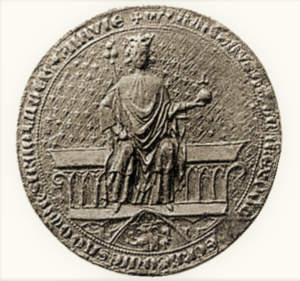
The borders of the Polish state were changed after the period of the division into districts, the shape of the country was different than during the times of Bolesław III. Silesia and Gdańsk Pomerania remained outside the kingdom, while Mazovia remained separate. Despite the weakening of the central government, from 1138 till 1320, Poland experienced great economic development, new cities were created, agricultural production developed and the standard of living of the population increased, and decentralization resulted in an increase in the number of cultural centers in the state ruled by the Piasts.
Author: Piotr Bejrowski
Translation: Alicja Rose & Jessica Sirotin