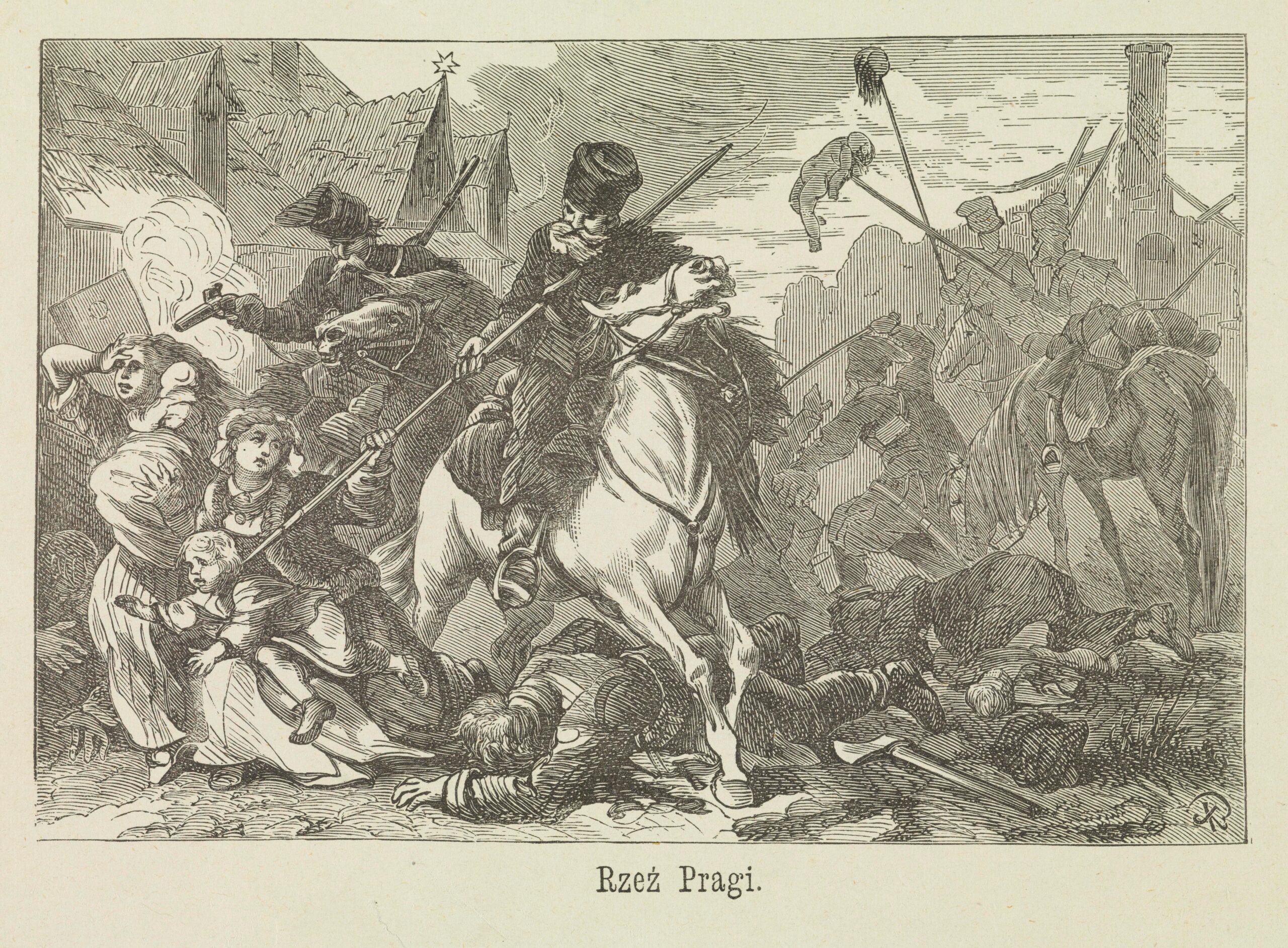
On November 4, 1794, one of the most tragic events in Polish history unfolded in Warsaw’s Praga district. The assault by Russian troops under Alexander Suvorov’s command led not only to the collapse of the city’s right-bank defenses and the defeat of the Kościuszko Uprising, but also to a massacre of civilians. Within hours, thousands of residents – women, children, and the elderly – were killed. The event is remembered as a symbol of Russian barbarity and one of the final, dramatic moments in the history of the Commonwealth, which, less than a year later, disappeared from the map following the Third Partition by Russia, Austria, and Prussia.
by Piotr Bejrowski
On March 24, 1794, the Kościuszko Uprising began in Kraków. It was the final attempt to secure independence after the Second Partition, carried out a year earlier by Russia and Prussia, which had once again significantly reduced the territory of the Commonwealth. Tadeusz Kościuszko, proclaimed Commander-in-Chief, achieved initial successes. The victory at Racławice in April 1794 and the awakening of patriotic fervour across much of society strengthened the insurrection. By the summer of that year, Warsaw had successfully repelled the Prussian-Russian siege. It was a moment of triumph. However, the tide turned on October 10, 1794, when the defeat at the Battle of Maciejowice, during which Kościuszko was captured, shattered the entire uprising.
Tomasz Wawrzecki assumed command, but his authority could not compare to that of his predecessor.
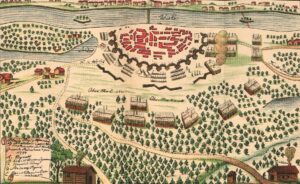
The idea of a full retreat to the Vistula River was rejected. Frantic preparations began to defend Praga, the right-bank district of Warsaw, where about 13,000–14,000 soldiers had been assembled. They were led by Józef Zajączek (center), Jakub Jasiński (left wing), and Władysław Jabłonowski (right wing). Zajączek was the commander-in-chief. Hastily erected fortifications, like earthen ramparts, ditches, wolf pits, and redoubts, went up. However, the sand from which the fortifications were built was unstable, and the defense line was overextended. The Lithuanian troops occupying the fortifications were poorly trained and demoralized by the retreat. Some of the more capable insurgent units remained 100 kilometers east of Warsaw on the Bzura River, tied down by the continued presence of the Prussians.
Alexander Suvorov led the troops marching on Praga. Suvorov was a general renowned for his skill and ruthlessness. He was a veteran of the Seven Years’ War (1756–1763), suppressed the Bar Confederation (1768–1772), which was used as a pretext for the First Partition of Poland, and he led bloody campaigns against the Turks. In Izmail, Bessarabia, in 1790, approximately 10,000 inhabitants were murdered with his consent. Empress Catherine II knew he was a man who would stop at nothing.
“Count Alexander Vasilyevich! The rebel Kościuszko, whom you are undoubtedly familiar with, having incited Poland, in his contacts with the monsters ruling France, intends to spread rebellion everywhere to annoy Russia,” she wrote in her order.
The Russian forces consisted of 23,000–25,000 soldiers and were equipped with more than 100 cannons. Suvorov decided not to waste time on a siege but to capture Praga in a single violent assault.
On November 3, 1794, the Russian artillery opened fire. At dawn the next day, seven columns launched an attack. The main attack targeted Jakub Jasiński’s positions. The fighting was fierce and was fought with bayonets. Jasiński, rejecting calls to retreat, sustained the defenders’ morale. When Zajączek ordered him to retreat, he reportedly replied: “Why despair now, when so many of us are ready to fight? It would be a disgrace to flee the battle.” He was bayoneted to death.
In other sectors, the situation quickly deteriorated. Zajączek, slightly wounded, retreated to the left bank of the Vistula, a move many viewed as treason. The bridge was burned down to slow the Russian advance. Berek Joselewicz’s Jewish regiment distinguished itself in the defense, suffering heavy losses. Joselewicz survived and later fought in the Legions formed alongside Napoleon Bonaparte and in the army of the Duchy of Warsaw.
After four hours of fighting, the defense line collapsed, and the Russians penetrated deep into Praga. What followed was a massacre of civilians. Everyone was slaughtered –women, children, the elderly, priests, and nuns. Houses were set ablaze, and the streets were littered with the bodies of people and animals. Historian Henryk Mościcki wrote: “Next to the human bodies were heaped piles of haphazardly abandoned equipment, the mutilated corpses of horses, dogs, cats, and pigs were bleeding… Praga was engulfed in flames and smoke, roofs collapsed with a crash amidst the terrifying howls of the conquerors.”
The number of victims is estimated at between 13,000 and 20,000. One witness, Clemens Maria Hofbauer, noted: “After the capture of the Praga suburb, over sixteen thousand people – men, women, and children – were murdered. We were forced to witness these cruel scenes because it was happening right across the street from our home.”
Even some Russian officers were horrified by what they saw. General Lev Engelhard wrote: “During battle, a man not only feels no mercy, but becomes even more brutal; murdering after the battle is over is a disgrace.” Russian historiography blames the Cossacks for the massacre. Yet Suvorov not only failed to stop it and punish the perpetrators, but clearly benefited from the atmosphere of terror that precipitated the capitulation. He reported: “Hurray, Warsaw is ours!” The Empress’s response was simple: “Hurray, Field Marshal Suvorov!”
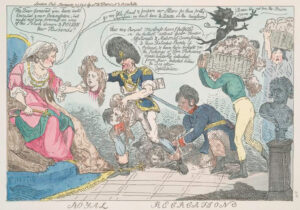
In a less restrained account of the battle, the Russian commander wrote to the Tsarina: “The last and most terrible massacre took place on the banks of the Vistula before the eyes of the people of Warsaw. The Poles trembled at this terrible sight. (…) After the whistle of shells and the clatter of bombs, groans and lamentations rang out from all parts of the city. A bell rang in alarm. This somber sound, merging with the lament of the weeping, filled the air with a piercing language. (…) In Praga, the streets and squares were strewn with the bodies of the slain, and blood flowed in streams. The Vistula, red with blood, carried with its current the bodies of those who, seeking refuge in it, drowned. Seeing this terrible sight, this faithless capital trembled.”
Suvorov was promoted and decorated for the massacre. Catherine II ordered a medal to be minted with the inscription: “I have restored what was torn away.” After his death, the commander became a cult figure. In Soviet times, films were made about him, and a military order was named after him.
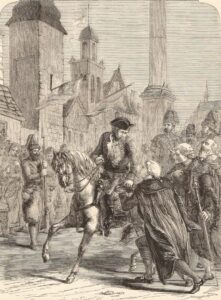
On the evening of November 4, 1794, the inhabitants of Warsaw on the left bank of the Vistula watched the burning Praga district. Morale collapsed. The next day, a delegation of townspeople and the king went to Suvorov. Capitulation was inevitable. The insurgent forces abandoned the capital. On November 9, 1794, the Russians entered Warsaw. The insurrection was nearing its end. On November 16, 1794, the final capitulation took place in Radoszyce.
The captured insurgents were sent to the Peter and Paul Fortress in St. Petersburg and then exiled to Siberia. Zajączek and Hugo Kołłątaj, one of the leading Polish politicians of the uprising, went to Galicia, where the Austrians detained them. Another reformist leader, Ignacy Potocki, remained in Warsaw, thus saving his good name, but ending up in a Russian prison.
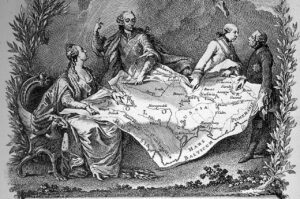
Less than a year later, Poland ceased to exist. On October 24, 1795, the Third Partition of Poland was signed by the partitioning powers. A month later, King Stanisław August Poniatowski abdicated. As a result, Poland lost its independence for 123 years, regaining it only on November 11, 1918.
The Praga Massacre became a symbol of Russian barbarity. Poet Maria Konopnicka wrote: “In no human speech / Words cannot express this siege / And no one has the courage / To describe this Praga carnage.” Only after 1918 were the victims symbolically commemorated by a cross on Jagiellońska Street, a plaque at the Church of Our Lady of Loreto, and a stone in front of St. Florian’s Cathedral. The defense and massacre of Praga was the last battle in the history of the Polish-Lithuanian Commonwealth. Although militarily insurmountable, it forever remained etched in national memory as a tragedy that depicted the cost of the fight for freedom. For contemporaries, it served as a warning and a source of trauma, and for posterity, a symbol of sacrifice and dedication.
Author: Piotr Bejrowski
Translation: Alicja Rose & Jessica Sirotin