In 1791, members of the Four-Year Sejm passed a resolution to build a Temple of Divine Providence as a votive sign of gratitude to the Constitution of 3 May. Poland’s turbulent history made it necessary to wait 225 years for the resolution to be implemented. The Poles did not forget their word.
by Piotr Abryszeński
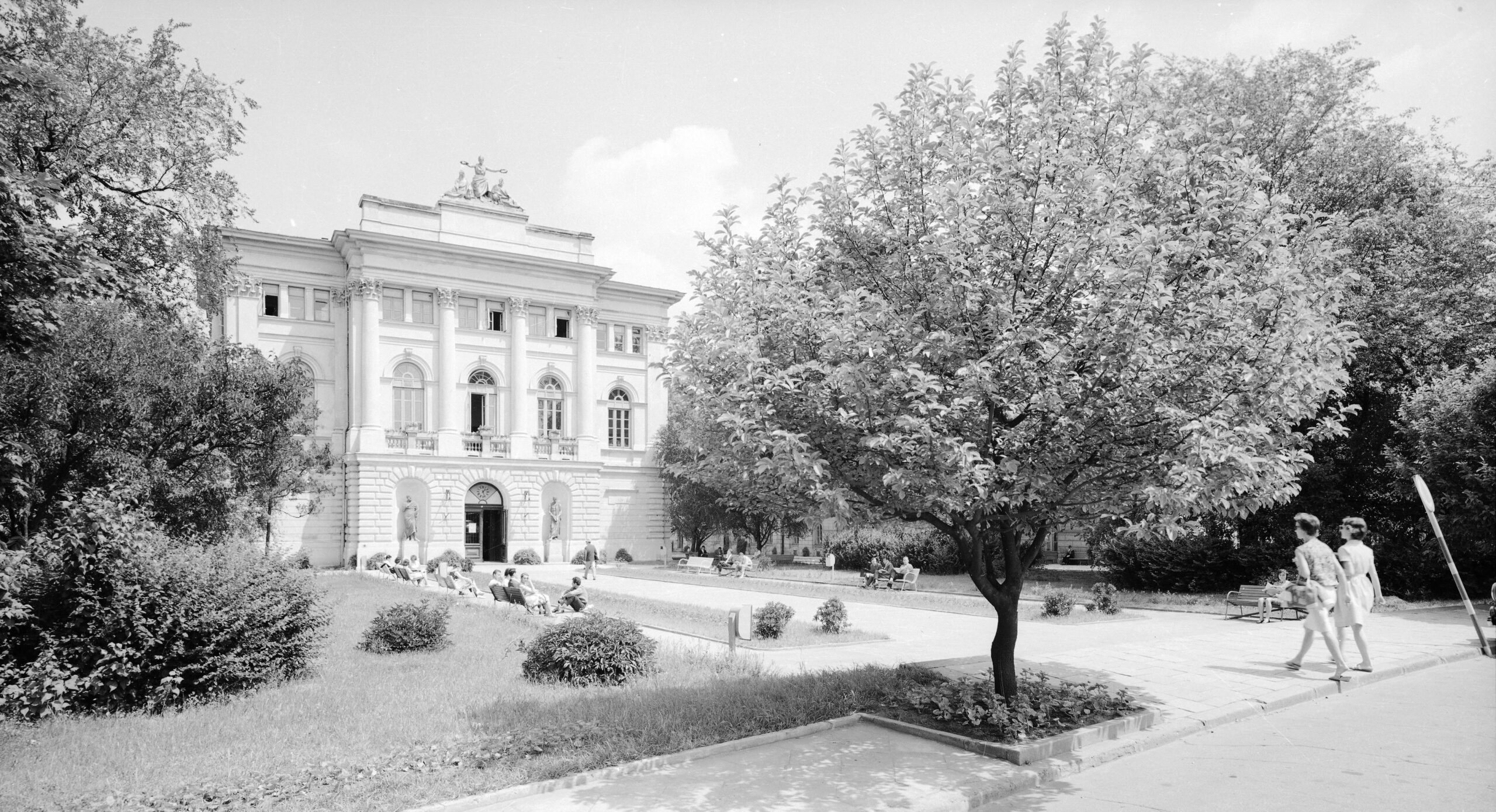
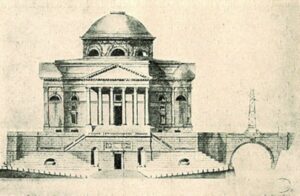
In a wave of euphoria following the adoption of the Constitution, on 5 May 1791 the members of the Four-Year Sejm decided to build the Temple of Providence as a votive offering. The building was planned to be erected near the Royal Baths, in what are now the Botanical Gardens of the University of Warsaw. The first ever architectural competition in the history of the country was announced, in which many architects and sculptors of the time took part. In the end, the design by Jakub Kubicki, an important figure in Polish Classicism, was approved.
The first concepts differed from the contemporary purpose and understanding of the idea of the temple, although they were in line with the fashion of the time: there was clear inspiration from Freemasonry, with which the architect and some of the authors of the Constitution were associated, syncretism, and supra-confessionalism. These features were to be emphasised by the symbol of the all-seeing eye, one of the Masonic symbols, visible on the building. The idea, therefore, departed from Catholicism, although it did find the support of the clergy.
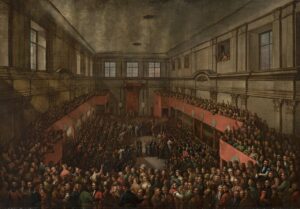
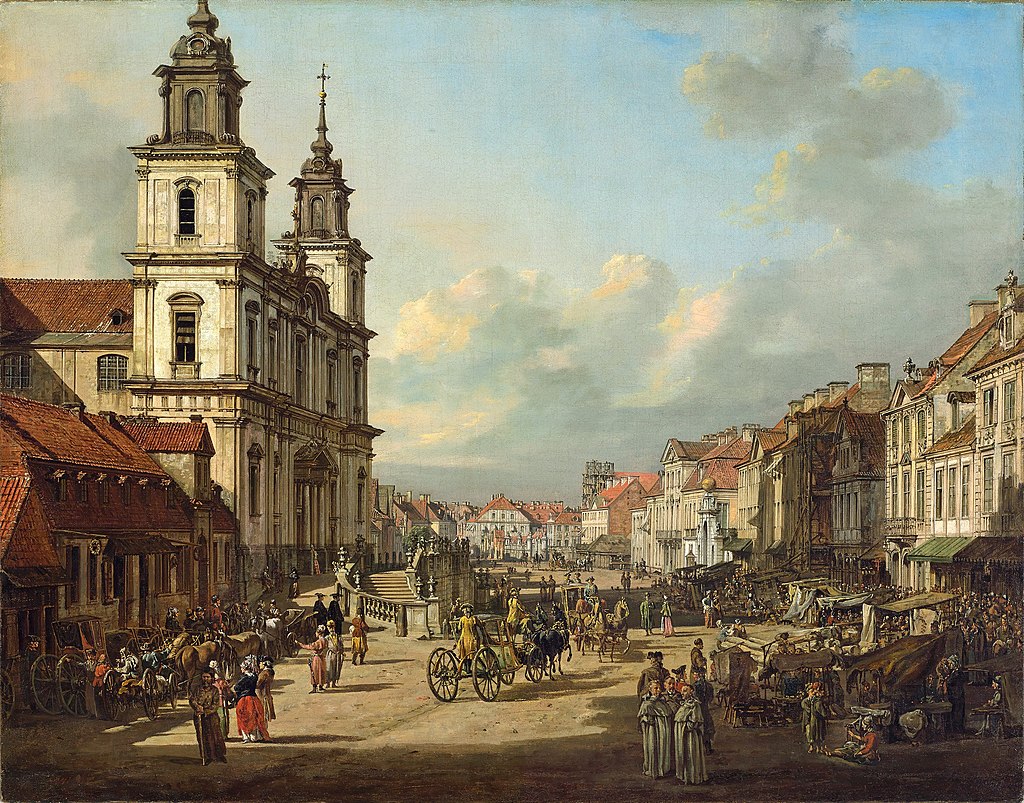
Preparatory works soon commenced. The ground was levelled, and excavations for the foundations and surroundings of the temple were carried out. The ceremony of laying the foundation stone took place on the first anniversary of the adoption of the Constitution. It was given a national character. The ceremony began with a Holy Mass held at the Holy Cross Church on Krakowskie Przedmieście St, from where a procession led by King Stanisław August Poniatowski proceeded to the future erection site of the temple. The consecration was performed by Michał Jerzy Poniatowski, Primate of Poland. Afterwards, he presented the King with a gilded trowel and hammer, prepared for the occasion, to symbolically launch the start of construction works. He was followed by the Primate and bishops, as well as all the ministers and senators.
Construction work was interrupted by the outbreak of the Polish-Russian war, which took place just a fortnight or so later. On the King’s orders, a temporary chapel was erected, where occasional celebrations were held. Soon the second and third partitions of Poland took place, and the country disappeared from the map of Europe. It proved impossible to build the temple for many decades.
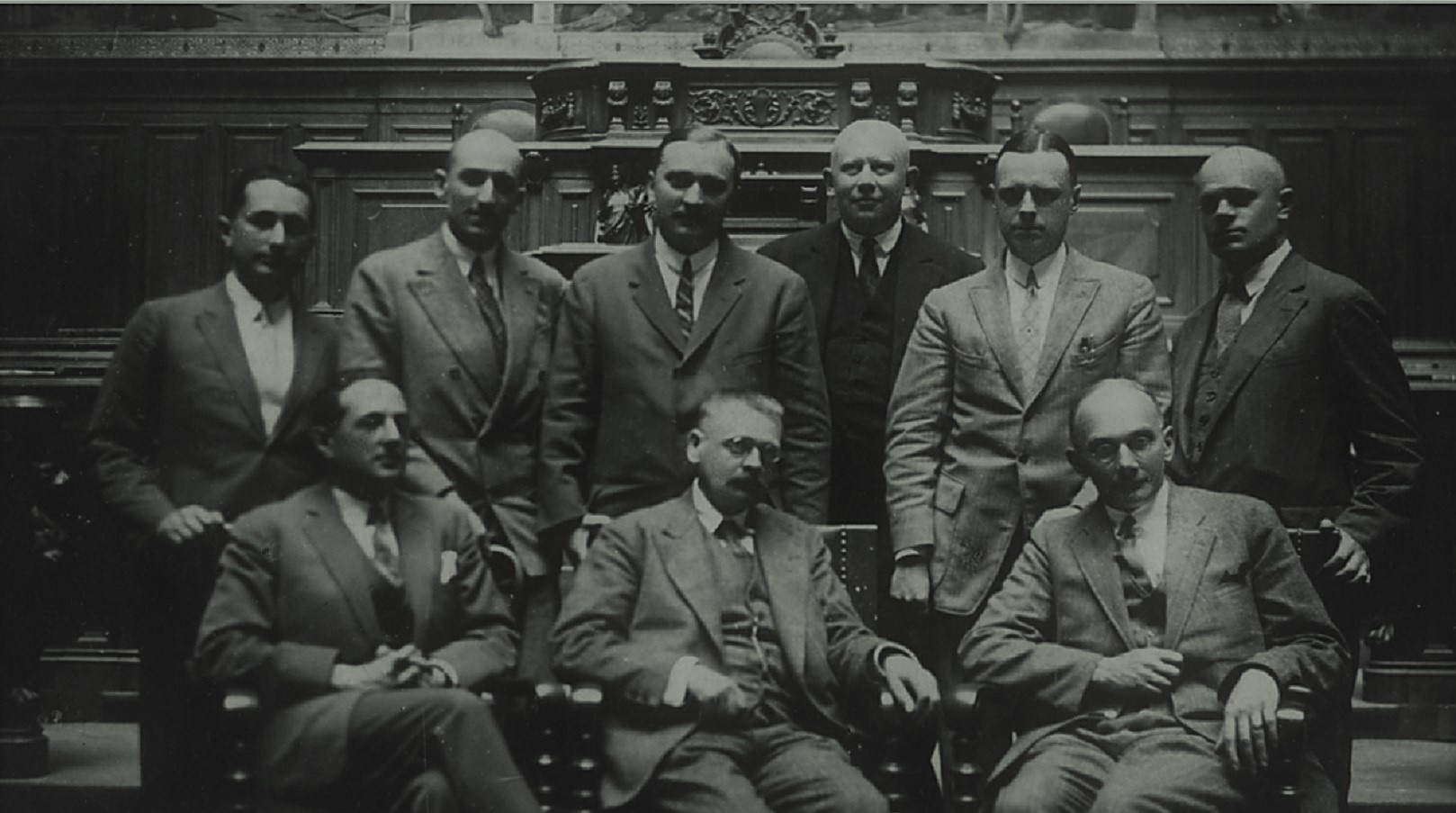
Only after Poland’s regaining of independence could the project be resumed. The Legislative Sejm returned to the Four-Year Sejm’s commitment and, on 17 March 1921, the day the March Constitution was adopted, it passed a bill ‘to fulfil the vow made by the Four-Year Sejm to erect in Warsaw a temple dedicated to the Divine Providence’. According to the law, the costs of building the temple were to be borne by the state, although public contributions were allowed to supplement the sums needed. The Polish government also funded a bursary for the daily celebration of Holy Masses for the prosperity of the country, and for the souls of all those who had perished fighting for independence and fidelity to the homeland.
Difficulties arising from the arduous reconstruction of the country, and post-war inflation, meant that work was halted for a time. In 1928, a new site for the temple was marked out: the Church and secular authorities decided that the construction should stand in Mokotów Field. A year later, an architectural competition was announced. The jury, consisting of representatives of the state authorities, the Church, and artists, finally selected a design by Bohdan Pniewski. The bishops, however, were sceptical about his concept because, in their opinion, it contained features alien to Catholic churches. One of the greatest critics of the project was the Metropolitan of Warsaw, Cardinal Aleksander Kakowski. Therefore, another competition was announced, which Pniewski won again, this time presenting a modified version of the design submitted earlier.
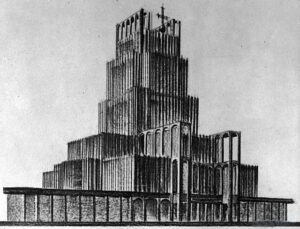
The temple designed by Pniewski referred to both gothic and modern architectural concepts, including cubism. Further changes were made following the death of Józef Piłsudski in 1935. The intention was to build a neighbourhood dedicated to the Marshal’s memory, conceptually referring to the Field of Mars, and the Temple of Divine Providence was to become its central point. Unfortunately, only the cornerstone of the church was laid (tradition had it that it was the same stone on which Tadeusz Kościuszko had knelt during his prayer before the Battle of Racławice). The Second World War broke out, which dashed any hopes of the project’s implementation.
Shortly after the war, the Primate of Poland, Cardinal August Hlond, attempted to return to the idea, but the communists were against it. Although the erection of the Temple of Divine Providence was not possible under communist rule, the memory of the undertaking did not fade. A commemorative plaque was placed at the original site of the temple on the initiative of the authorities of the University of Warsaw. In the 1970s, on the initiative of Primate Stefan Wyszyński, a parish church was built specifically dedicated to Divine Providence, as a reminder of the need to fulfil the vows of 1791. In fact, this was the first church in Warsaw since the end of the Second World War to receive permission for construction from the communist authorities.
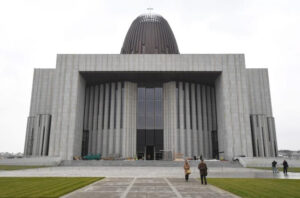
The chance to fulfil the vows appeared after the fall of communism. Again, the idea of building a temple was related to work on the Constitution. Precisely 200 years after the passing of the Constitution of 3 May 1791, in 1991, the Constitutional Committee of the Senate confirmed the validity of the resolution of the Four-Year Sejm. Several years later, Wilanów Field was designated as the location for the temple. The cornerstone was blessed by Pope John Paul II during his visit to Poland in June 1999. The designs selected in competitions were again met with criticism. Following lively discussions and further modifications, the long-awaited launch of the construction took place.
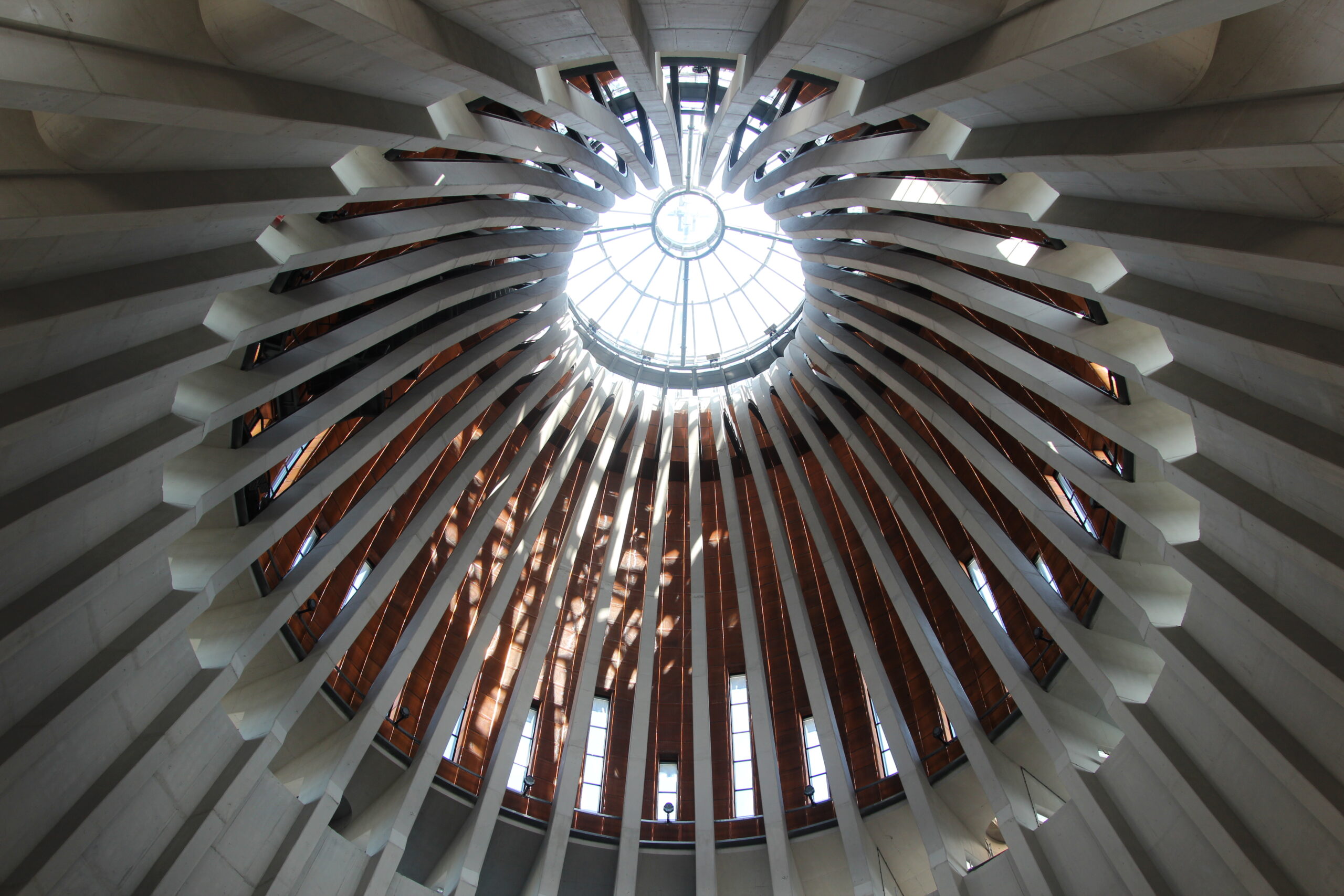
The Temple of Divine Providence was opened on 11 November 2016. On that day, in the presence of representatives of Poland’s highest authorities, the first Holy Mass was also celebrated. And, although the temple already fulfils its function, work on its decoration will continue for many years to come.
Author: Piotr Abryszeński (PhD, employee of the History Research Office of Institute of National Remembrance)
Translation: Mikołaj Sekrecki